You vacuum every week. You deal with spills the moment they happen. And yet — your carpet still doesn't quite look or smell the way it should.
That's not unusual. Carpets are designed to hide what they hold, and in homes across Charlotte, Fort Mill, and Rock Hill, they're working hard: absorbing red clay tracked in from the yard, trapping pollen during North Carolina's brutal spring seasons, and holding onto moisture in the kind of Carolina humidity that doesn't quit until October.
What's visible on the surface is rarely the full picture. This guide walks you through the complete carpet care process — from the right cleaning methods and daily maintenance habits to knowing when professional help is the smarter call.
Want to skip straight to the solution? Velvo's professional carpet cleaning team serves Charlotte, Fort Mill, and Rock Hill with truck-mounted hot water extraction — removing what vacuums and store-bought products can't reach. Schedule your cleaning →
Why Carpet Cleaning Matters More Than You Think
A carpet can hold up to four times its own weight in dirt before it even looks soiled. That's not a scare tactic — that's just how carpet fiber works. Dirt, dust mites, pet dander, pollen, bacteria, and moisture all settle deep into the pile, undisturbed, until something actually pulls them out.
In the Carolinas, this accumulates faster than most homeowners expect. Spring pollen counts in Charlotte rank among the highest in the country, and that fine yellow dust gets tracked inside on shoes, clothes, and pets daily. York County homes deal with red clay that bonds stubbornly to carpet fibers and resists standard cleaning. Summer humidity drifts inland and keeps moisture levels elevated — which creates conditions where mold and mildew can develop in carpet backing if spills aren't handled quickly and correctly.
The indoor air quality angle is worth understanding too. The Carpet and Rug Institute notes that carpet acts as a reservoir for airborne particles. That sounds alarming, but it actually works in your favor — a regularly cleaned carpet traps and removes those particles rather than letting them recirculate through your home's air. The key word is cleaned. A neglected carpet eventually stops trapping and starts releasing.
Carpet Cleaning Methods Explained
Not all carpet cleaning delivers the same results. The method matters — and knowing the difference helps you evaluate whether a rental machine, a professional service, or a low-moisture treatment is right for your situation.
Hot Water Extraction (Steam Cleaning)
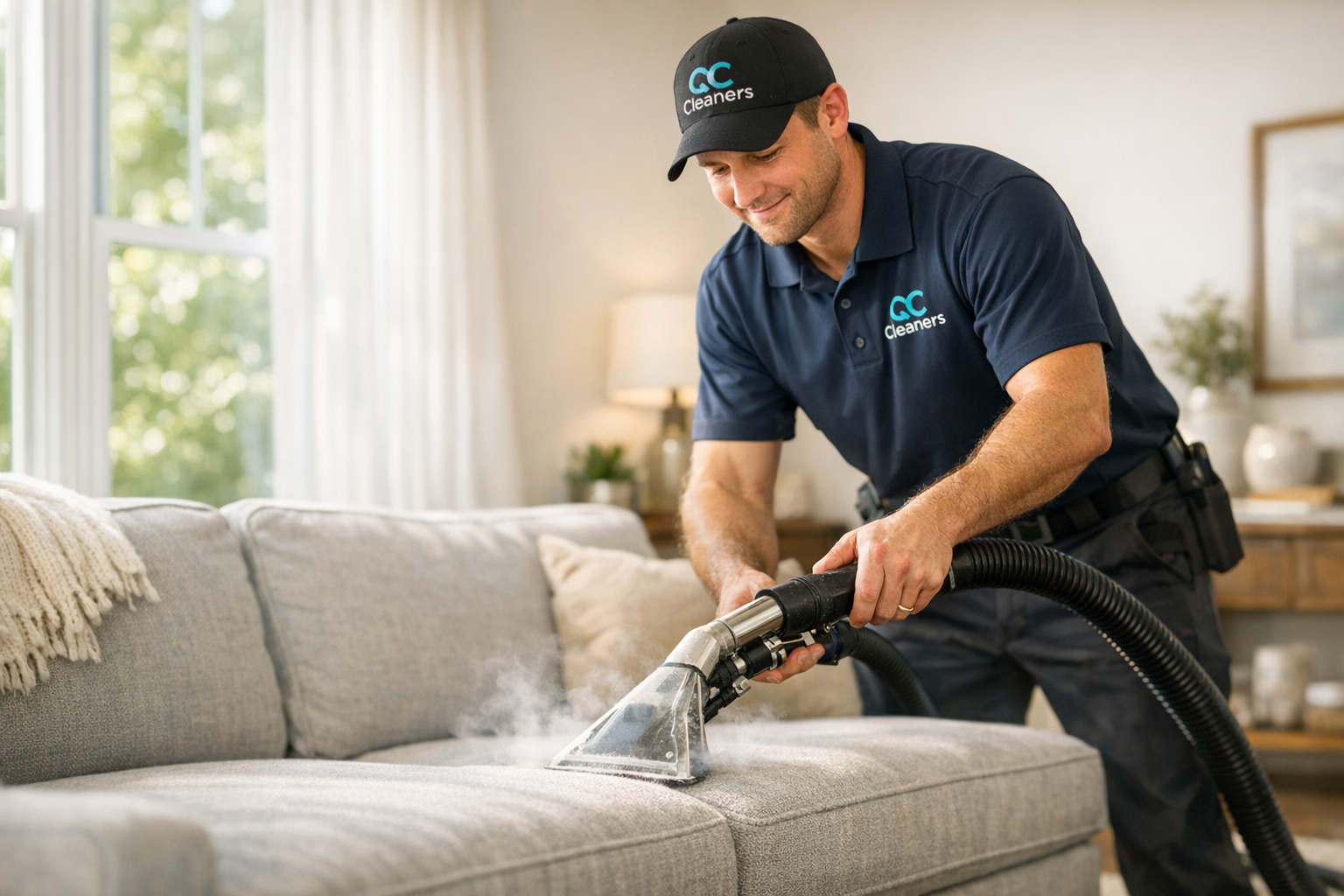
Hot water extraction is the gold standard for residential carpet cleaning and the method recommended by the IICRC — the Institute of Inspection, Cleaning and Restoration Certification. Despite being widely called "steam cleaning," the process doesn't actually use steam. A truck-mounted or portable unit injects hot water mixed with a cleaning solution deep into the carpet fibers, then immediately extracts it along with dissolved dirt, allergens, and debris.
The result is a thorough clean that reaches the base of the pile — not just the surface. It's the most effective method for reducing allergen levels and removing embedded soil that regular vacuuming can't touch. Drying times typically run four to eight hours depending on humidity, ventilation, and the equipment used — something worth planning around before you schedule. Our guide on how long carpet takes to dry after cleaning covers what affects that timeline and how to speed it up.
Carpet Shampooing
Shampooing uses a rotary machine to work a foamy detergent solution deep into carpet fibers — effective at loosening heavy soil, especially in high-traffic areas. The drawback is residue. If the carpet isn't thoroughly rinsed afterward, leftover soap attracts new dirt quickly, and shampooed carpets can look dull or re-soiled faster than expected.
It still has a place in certain situations — heavily soiled commercial spaces, or areas that need aggressive agitation before a rinse extraction. For most residential homes, though, hot water extraction handles the same deep cleaning without the residue concern.
Dry Cleaning and Encapsulation
Low-moisture methods like encapsulation use chemical compounds that crystallize around soil particles, which are then vacuumed away after drying. The appeal is obvious: carpets are usable within an hour or two, with virtually no drying time. They're a solid option for light maintenance cleaning or situations where minimal disruption is a priority.
The limitation is depth. Encapsulation doesn't penetrate as far into the carpet pile as hot water extraction, so it's less effective for allergens or embedded soil in homes with heavy foot traffic or pets.
If you're still deciding between methods, our comparison of steam cleaning vs. carpet shampooing breaks down the trade-offs with more detail.
Carpet Maintenance Tips for Homeowners
What happens between professional cleanings matters just as much as the cleaning itself. These habits genuinely extend carpet life — and keep your home feeling cleaner day-to-day.
Vacuum consistently — and correctly. High-traffic areas need vacuuming at least once or twice a week. Slow, overlapping passes with a HEPA-filtered vacuum remove significantly more particulate matter than quick single-direction passes. HEPA filters are worth the investment specifically because they trap fine allergens rather than recirculating them back into your air.
Treat spills immediately. Blot, don't rub. Rubbing pushes moisture deeper into the fibers and spreads the stain outward. Work from the outside edge toward the center, start with cold water, and reach for a cleaning solution only if plain water doesn't handle it. Most fresh spills — even wine and coffee — come out cleanly if you act within the first few minutes.
Control what comes through the door. This is especially relevant for Fort Mill and Rock Hill homeowners dealing with red clay. A quality mat at every entrance intercepts the bulk of soil before it reaches carpeted rooms. A no-shoes policy in those rooms makes a measurable difference in how long your carpet stays clean between professional appointments.
Keep humidity in check. Carolina summers are humid enough outdoors — try not to let that moisture follow you inside. Keep indoor humidity below 60%, run exhaust fans in bathrooms, and address any wet carpet areas within 24 to 48 hours. Moisture that lingers in carpet backing creates conditions for mildew that's difficult to reverse.
Rotate furniture periodically. Heavy sofas and beds cause compression that becomes permanent over time. Moving furniture even slightly every year or two spreads wear more evenly and extends the carpet's life in those spots.
When Professional Carpet Cleaning Is Necessary
DIY cleaning has its place. Rental machines and store-bought solutions work fine for light surface maintenance and small spot treatments. But there's a real performance gap between consumer equipment and professional-grade systems — and in certain situations, that gap is exactly what's standing between you and a clean carpet.
Rental machines typically operate at lower water temperatures and reduced suction compared to truck-mounted professional units. That means less soil extraction, more moisture left behind, and longer drying times that increase the risk of mildew in carpet backing.
The situation calls for professional cleaning when:
- Visible discoloration has developed in high-traffic lanes that vacuuming won't lift
- Pet odors persist even after surface treatments
- There's been any water intrusion or flooding — even minor
- Allergy symptoms in your household are worsening despite regular vacuuming
- The carpet simply hasn't been deep cleaned in more than 18 months
Most industry organizations, including the IICRC, recommend professional cleaning every 12 to 18 months under normal household conditions — and more frequently for homes with pets, young children, or allergy sufferers. Our guide on how often carpets should be cleaned walks through the factors that affect that schedule in more detail.
If any of those situations sound familiar, your carpet needs more than your vacuum can give it. Velvo's professional hot water extraction reaches deep into the pile to remove allergens, pet odors, and embedded soil that consumer equipment consistently leaves behind — and your carpets are ready to use the same day. Get a free quote →
Professional Carpet Cleaning Services in Charlotte, Fort Mill, and Rock Hill
Every home is different. A condo in South End Charlotte with area rugs over hardwood has different cleaning needs than a four-bedroom split-level in Fort Mill with two dogs and three kids. Velvo serves homeowners across the full Charlotte metro and Carolinas with professional carpet and upholstery cleaning tailored to each home's actual situation — not a one-size-fits-all approach.
Service areas and local-specific information are available for each community we serve:
- Charlotte: Charlotte carpet cleaning →
- Fort Mill: Fort Mill carpet cleaning →
- Rock Hill: Rock Hill carpet cleaning →
Carpet Cleaning Topics Every Homeowner Should Know
This guide covers the core of what you need — but each topic below goes deeper into areas that deserve their own focused treatment. If one of these situations applies to you, the linked guide is worth reading before you make any decisions.
How often should you clean your carpet? Foot traffic, pets, and local environment all factor in. The baseline recommendation is every 12 to 18 months, but many homes need it more often. Read the full frequency guide →
How long does carpet take to dry after cleaning? Drying time ranges from 4 to 24 hours depending on the method, ventilation, and humidity — which in the Carolinas is a real variable. See what affects drying time →
Steam cleaning vs. shampooing — which is better for your home? Both methods have legitimate uses, but they're not interchangeable. Compare them side by side →
What does professional carpet cleaning cost in Charlotte? Pricing depends on room count, square footage, and carpet condition. See current cost estimates →
Carpet cleaning guide for Fort Mill homeowners: Red clay soil and York County humidity create specific challenges that generic advice doesn't address. Read the Fort Mill guide →
Move-out carpet cleaning in Fort Mill: Rental properties and lease-end situations have their own cleaning standards and expectations. See what's required →
Carpet cleaning guide for Rock Hill homeowners: Rock Hill's soil profile and seasonal conditions affect how carpets wear and what maintenance looks like here. Read the Rock Hill guide →
How to remove red clay stains from carpet: Red clay is one of the most stubborn stains in the Carolinas — and the wrong approach makes it significantly worse. Learn the right removal technique →
Ready for Carpets That Actually Feel Clean?
If it's been over a year since your last professional cleaning — or you're dealing with pet odors, set-in stains, or carpets that look dull despite regular vacuuming — it's time to go deeper than your vacuum can reach.
Velvo serves Charlotte, Fort Mill, Rock Hill, and surrounding communities with professional carpet cleaning that addresses the problem at its source. No pressure, no unnecessary upsells — just a straightforward service that leaves your carpets cleaner and your home feeling better.
Request a free quote from Velvo →
Frequently Asked Questions
How often should I have my carpets professionally cleaned? The IICRC and most carpet manufacturers recommend professional cleaning every 12 to 18 months for the average household. Homes with pets, young children, or allergy sufferers typically benefit from cleaning every 6 to 12 months. In the Carolinas, heavy spring pollen and red clay tracking can shorten that window — especially for entryways and rooms with high foot traffic.
Is hot water extraction safe for all carpet types? Hot water extraction is safe for most residential carpet types, including nylon, polyester, and olefin — which cover the majority of homes in the Charlotte area. Delicate natural fibers like wool require lower water temperatures and gentler solutions. A professional cleaner will identify the fiber type before starting and adjust accordingly. If you're unsure about your carpet, ask before any work begins.
Can professional cleaning remove pet odors completely? In most cases, yes — but the outcome depends on how deep the odor source has penetrated. Surface-level odors respond well to hot water extraction combined with enzyme-based treatments that break down odor-causing compounds at the molecular level. Odors that have soaked through the backing into the subfloor beneath require more targeted treatment and may need more than one visit. A professional assessment will tell you what you're actually dealing with.
What's the difference between a rental carpet cleaner and professional equipment? Rental machines operate at lower water temperatures and significantly less suction than truck-mounted professional units. They can handle light surface soil reasonably well, but they leave behind more moisture — which increases drying time and the risk of mildew in the backing — and don't extract embedded dirt as thoroughly. For anything beyond routine maintenance, professional equipment delivers results that rental machines aren't built to match.