
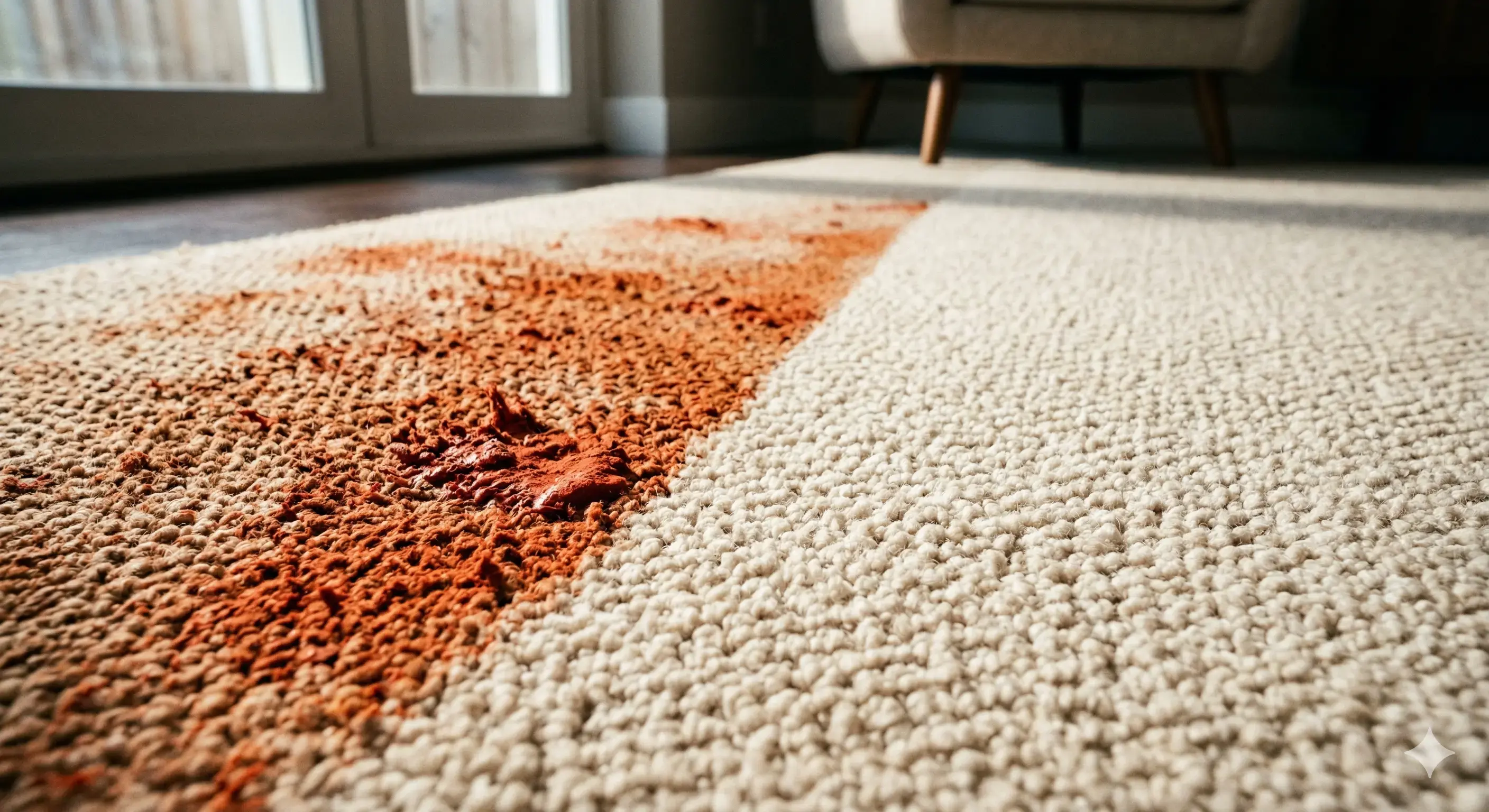
Red clay stains have a way of showing up at the worst possible time—and once they’re in your carpet, they don’t leave easily.
If you live in Rock Hill or anywhere in the Carolinas, you’ve probably dealt with it: orange-red dirt tracked in by kids, pets, or a single careless step after rain. You clean it like any other stain… and somehow it just spreads or gets worse.
That’s because red clay isn’t just dirt—it’s packed with iron oxide (essentially rust), which bonds tightly to carpet fibers.
The good news? With the right method, you can remove or significantly reduce most red clay stains. And just as importantly, you can avoid the common mistakes that make them permanent.
Struggling with stubborn red clay stains in Rock Hill or York County? Velvo's professional carpet cleaning removes iron oxide stains that DIY methods leave behind — restoring your carpet's appearance without damaging the fibers. Request a quote today.
Why Red Clay Is So Hard to Remove from Carpet
Not all dirt behaves the same—and red clay is in a category of its own.
South Carolina red clay is:
- Fine-grained, so it penetrates deep into carpet fibers
- Dense, making it harder to lift with standard cleaning
- Rich in iron oxide, which chemically bonds to fibers like rust
This combination creates a stain that’s both physical (embedded particles) and chemical (iron bonding).
Here’s where most people run into trouble:
- Cleaning while the clay is still wet → spreads the stain deeper
- Using heat (hot water or steam) → accelerates bonding
- Scrubbing aggressively → pushes particles into the backing
Think of it this way:
👉 Regular dirt sits on your carpet.
👉 Red clay works its way into your carpet.
That’s why it requires a different approach.
What Most Homeowners Get Wrong First
When you see a stain, your instinct is to act fast. With red clay, that instinct can backfire.
Common mistakes that make stains worse:
- Scrubbing wet clay → embeds it deeper into fibers
- Using hot water → heat-sets iron oxide stains
- Using harsh or alkaline cleaners → damages fibers or locks in discoloration
- Over-wetting the area → pushes clay into the backing and increases drying time
A few subtle but important missteps:
- Treating the stain before it dries
- Rubbing instead of blotting
- Leaving soap residue behind (which attracts future dirt)
In humid areas like Rock Hill and York County, this gets even trickier. Carpet dries slower, increasing the risk of mildew and lingering odors if too much moisture is used.
Quick check:
If your stain got bigger after cleaning… one of these mistakes is likely why.
Step-by-Step: How to Remove Red Clay Stains from Carpet at Home
This method works best for fresh or moderately set stains. If the stain is older or widespread, skip ahead to the professional section.
1. Let the clay dry completely
It feels counterintuitive—but it’s critical.
Dry clay can be removed. Wet clay spreads.
2. Vacuum thoroughly
Use slow, repeated passes from different angles.
Goal: remove as much dry soil as possible before adding moisture.
3. Mix a gentle cleaning solution
Use:
- 1 tablespoon dish soap
- 2 cups cold water
- Optional: 1 tablespoon white vinegar (for tougher stains)
For light carpets:
- A diluted hydrogen peroxide solution (1:3 with water) can help
- Always spot-test first to avoid discoloration
4. Blot—don’t scrub
Apply solution to a cloth, not directly onto the carpet.
- Work from the outside inward
- Use a clean section of cloth each time
- Be patient—this step takes repetition
5. Rinse with cold water
Residual soap attracts dirt.
Lightly blot with clean water to remove any remaining solution.
6. Dry the area quickly
- Use clean towels + weight
- Turn on fans or airflow
- Avoid foot traffic until fully dry
💡 Pro insight:
Even when the stain “looks gone,” fine particles may remain deeper in the pile—this is why some stains reappear after drying.
When DIY Cleaning Isn't Enough
Sometimes, no matter how carefully you follow the steps, the stain remains.
That’s usually a sign the iron oxide has:
- Bonded deep into fibers
- Reached the carpet backing
- Been set by heat or previous cleaning attempts
You’ll likely need professional cleaning if:
- The stain is weeks or months old
- It spread during earlier cleaning
- The carpet looks dull beyond the stain area
- Multiple products haven’t worked
Professional cleaners use truck-mounted hot water extraction, which:
- Reaches deep into carpet fibers
- Flushes out embedded particles
- Uses controlled heat and chemistry to break down mineral stains
According to the Carpet and Rug Institute, hot water extraction is the most effective method for removing deeply embedded soils—including mineral-based stains like red clay.
There’s also a health angle:
The EPA notes that carpets trap fine particulate matter. Red clay contributes to this buildup, meaning professional cleaning improves both appearance and indoor air quality.
If the stain is still there after treating it yourself, don’t keep scrubbing—you may be setting it deeper. Velvo's truck-mounted extraction system removes iron oxide stains and embedded clay that surface cleaning leaves behind. Schedule your Rock Hill carpet cleaning here.
Professional Carpet Cleaning in Rock Hill, SC
In areas like Rock Hill and York County, red clay isn’t occasional—it’s constant.
That’s why professional cleaning isn’t just a fix—it’s often part of regular home maintenance.
Velvo works with homeowners across:
- Rock Hill
- Fort Mill
- Greater Charlotte area
Why homeowners call for professional cleaning:
- Restore carpet appearance after heavy clay exposure
- Extend carpet lifespan
- Remove allergens and fine soil particles
- Improve indoor air quality
For homes with kids or pets, this becomes even more important—since clay tracking tends to be frequent and unavoidable.
If you want to go deeper:
Red clay stains don’t have to be permanent—but waiting too long can make them harder (and more expensive) to remove. Velvo’s professional carpet cleaning in Rock Hill removes deep-set iron oxide stains and restores your carpet’s original look. Request your quote today.
Frequently Asked Questions
Can I remove red clay stains from carpet myself?
Yes—if the stain is fresh or moderate. Let the clay dry first, vacuum thoroughly, then use a mild cleaning solution and blot carefully. Deep or older stains usually require professional extraction for full removal.
Why does red clay stain carpet so badly?
Because it contains iron oxide (rust), which chemically bonds to carpet fibers. Its fine particles also penetrate deep into the carpet, making it harder to remove than regular dirt.
Does vinegar remove red clay from carpet?
Vinegar can help loosen iron oxide when combined with dish soap and cold water. It’s effective for lighter stains but won’t fully remove deep or set-in clay.
How do I prevent red clay from getting into my carpet?
Use:
- Door mats at every entrance
- Boot scrapers outside
- A no-shoes policy indoors
In high clay areas like Rock Hill, these small habits can dramatically reduce staining.