

Your lease ends in two weeks. You've packed the boxes, cleaned out the fridge, and scrubbed every bathroom tile. The apartment looks move-out ready — until you take a hard look at the couch.
There's a faint coffee ring on the armrest. A shadow you can't explain on the seat cushion. And the whole thing carries that lived-in smell your nose stopped registering months ago. Now multiply that by every upholstered piece in the apartment.
For renters in Fort Mill, SC, overlooking upholstery during move-out prep is one of the most common — and most expensive — mistakes. Landlords and property managers across York County are paying closer attention to furniture condition during inspections, especially in furnished rentals and units with built-in seating or window bench cushions. And if you're a homeowner preparing to sell, stained or odorous upholstery quietly undermines every other improvement you've made to the house.
The good news: whether you tackle it yourself or bring in professional help, addressing your upholstery before the walkthrough is straightforward once you know what landlords actually look for.
Moving out of a Fort Mill rental soon? Velvo's move-out upholstery cleaning in Fort Mill removes the deep-set stains, odors, and allergens that trigger deposit deductions — so you can hand over the keys knowing your deposit is protected.
Why Upholstery Gets So Dirty (Even When You're Careful)
Most people sit on their couch every single day but clean it maybe once or twice a year — if that. Fabric absorbs body oils, sweat, pet dander, food particles, and dust mites at a rate that would surprise most renters. Unlike hard floors or countertops, upholstery fibers trap these contaminants deep inside the padding, well below where regular vacuuming can reach.
Fort Mill's climate accelerates the problem. South Carolina humidity creates ideal conditions for mildew and bacteria growth inside cushion foam, particularly during the long stretch from April through October. Add York County's notorious red clay — tracked in on shoes and pets throughout the year — and even a light-colored sofa starts looking noticeably dingy within a few months of moving in.
Here's what catches people off guard: the damage accumulates so gradually that you stop seeing it. Try flipping a cushion and comparing the underside to the top. That contrast tells the real story of what's happened to your upholstery — and it's exactly what a landlord notices during a walkthrough.
What Landlords Actually Look For During Move-Out Inspections
Understanding what triggers a deposit deduction helps you focus your cleaning efforts where they'll actually matter.
Visible Stains and Discoloration
Coffee spills, wine marks, ink spots, and food stains are all fair game for deductions — that part is obvious. What renters often miss is that landlords also flag general discoloration: the gradual yellowing or graying that develops on armrests and headrest areas from daily contact with skin and hair products. According to HUD guidelines, landlords can deduct for damage beyond normal wear and tear, and heavy staining or widespread discoloration typically crosses that line.
Odors Embedded in Fabric
Pet odors are the number one complaint from property managers handling Fort Mill apartment turnovers. Smoke is a close second. These smells don't just sit on the surface — they penetrate deep into cushion foam and even the wooden frame beneath the upholstery. A quick spray of air freshener might mask things for the first hour, but any experienced landlord knows the difference between a deodorized couch and a genuinely clean one.
Allergen Buildup
This one surprises most renters. Professional upholstery cleaning can remove up to 90% of allergens and trapped particles from fabric — a detail that matters both for deposit purposes and for the next occupant's health. Some Fort Mill property management companies now require documented professional cleaning as part of the move-out checklist, following the same logic behind carpet cleaning requirements in most lease agreements.
Pet Hair and Surface Damage
Beyond odor, pet hair woven deep into fabric texture and scratch marks along upholstery edges are common deduction triggers. If your cat treated the corner of the couch as a scratching post, that's physical damage — no cleaning method fixes torn or frayed fabric. But embedded pet hair and dander throughout the cushions? That's exactly what proper cleaning resolves.
DIY Upholstery Cleaning Before Moving: What Actually Works
Before calling in professional help, there are steps worth trying on your own. The key is being honest about what home methods can realistically accomplish versus what requires commercial-grade equipment.
What You Can Handle at Home
- Vacuum thoroughly with an upholstery attachment. Go over every surface — tops, sides, backs, and especially under and behind cushions. Use the crevice tool along seams where crumbs and pet hair accumulate. This alone won't deep clean anything, but it removes the surface layer of debris that makes every other cleaning step less effective.
- Spot-treat individual stains. Mix a small amount of dish soap with warm water and test the solution on a hidden area first — under a cushion or along the back panel. Blot stains gently rather than rubbing, which pushes contamination deeper into the fibers and can damage the weave. For guidance on specific stain types, our guide on how to clean a fabric couch covers the most common scenarios.
- Deodorize with baking soda. Sprinkle a generous layer across the entire surface, let it sit for 15–20 minutes, then vacuum it up completely. This works well for mild, surface-level odors — though it won't reach anything that's soaked into the padding or foam beneath.
- Check the care tag before using any product. That small tag on your furniture isn't decoration. "W" means water-based cleaners are safe. "S" means solvent-only — water will leave permanent marks or damage the fabric. "WS" allows either method, and "X" means vacuum only, no liquids at all. Ignoring this tag is exactly how renters accidentally cause more damage right before move-out than the entire lease period did.
Where DIY Hits Its Limit
Even a thorough DIY effort only addresses about 30–40% of what's actually embedded in your upholstery. Consumer-grade spot cleaners and portable rental machines simply lack the extraction power to pull contaminants out of cushion cores. Worse, they often leave behind excess moisture that creates mildew — a particularly real risk in Fort Mill's humid climate.
So how do you know if DIY was enough? If you've lived in the apartment for more than a year, have pets, or still detect any odor after cleaning, the surface-level approach probably won't hold up during a thorough move-out inspection.
When Professional Cleaning Is the Right Call
There's a practical dividing line between what DIY can handle and what genuinely needs professional intervention. For most Fort Mill renters preparing for end-of-lease upholstery cleaning, the decision comes down to a handful of clear signals:
- You've lived in the unit for two or more years without professional upholstery cleaning
- Pets have had regular access to the furniture
- There are stains you've already attempted to remove without full success
- The fabric carries a persistent odor that survives vacuuming and deodorizing
- Your lease specifically requires professional cleaning documentation
- You're preparing a home for sale and need furniture to present at its best
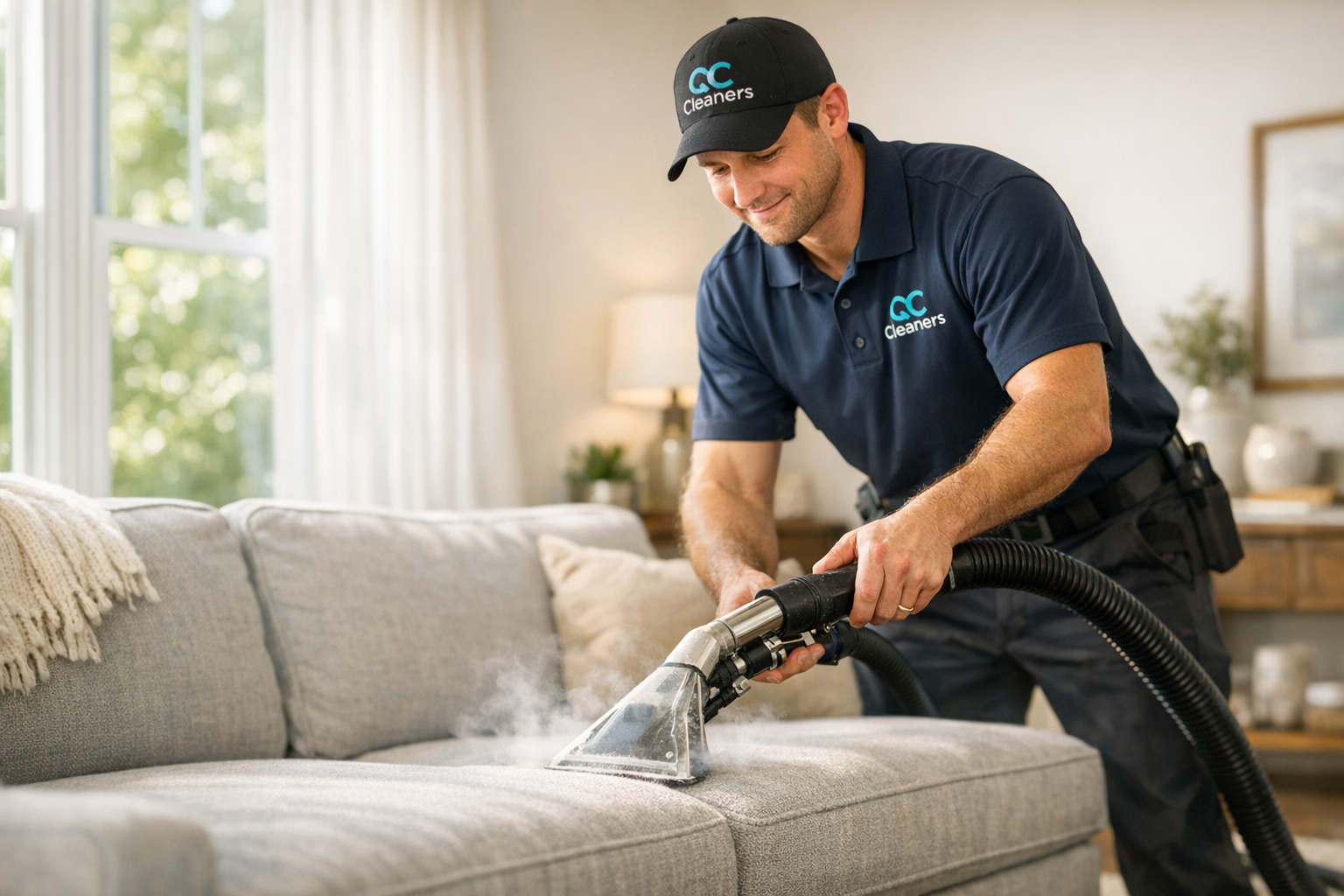
The reason professional results look so different comes down to the method. Hot water extraction — the fabric upholstery cleaning method recommended by the IICRC (Institute of Inspection, Cleaning and Restoration Certification) — injects heated cleaning solution deep into the textile and immediately extracts it along with dissolved soil, allergens, and bacteria. Consumer machines can't match the temperature, pressure, or suction power involved. The difference in results is visible immediately.
When your security deposit depends on the outcome, guesswork isn't worth the gamble. Velvo's professional upholstery cleaning uses hot water extraction to remove the embedded dirt, stains, and odors that DIY methods can't reach — and provides documentation you can present to your landlord as proof of professional service.
Move-Out Upholstery Cleaning Services in Fort Mill
Whether you're moving out of a Fort Mill apartment or preparing a York County rental property for new tenants, Velvo provides upholstery cleaning throughout Fort Mill with a clear process and predictable pricing — no surprise charges after the work is done.
Here's what the process looks like: a technician inspects each piece, identifies the fabric type and selects the appropriate cleaning method, pre-treats visible stains, then performs hot water extraction across every surface. Cushions are cleaned individually — tops, bottoms, and sides — because that's where the deepest contamination sits.
What sets this apart for renters is the documentation. Velvo provides a professional cleaning receipt you can include with your move-out paperwork. This detail matters more than most people expect. A documented receipt from a licensed cleaning company carries real weight with property managers and is often the difference between a full deposit return and a deduction line item for "furniture cleaning."
Professional sofa cleaning before moving also makes financial sense beyond the immediate deposit calculation. Abrasive soil particles trapped in fabric act like fine sandpaper every time someone sits down, gradually wearing through fibers and shortening the life of the piece. Regular professional cleaning removes those particles and keeps upholstery looking and performing better for years — worth considering if you're a Fort Mill homeowner planning to keep your furniture long-term.
For more on maintaining upholstery between professional cleanings, our complete upholstery cleaning guide covers best practices, and the Fort Mill homeowner's guide to upholstery care addresses region-specific concerns like humidity and pollen.
Book Your Move-Out Upholstery Cleaning Now — Before the Calendar Fills Up
Move-out cleaning requests in Fort Mill spike at the end of every month, and availability fills fast — especially from May through August when lease turnovers peak across York County. Waiting until the day before your walkthrough limits your options and adds stress to an already hectic timeline.
Protect your deposit and leave your rental in inspection-ready condition. Schedule move-out upholstery cleaning in Fort Mill with Velvo — straightforward pricing, no surprises, and results that satisfy even the most detail-oriented landlord.
Frequently Asked Questions
How far in advance should I schedule move-out upholstery cleaning?
Book at least five to seven days before your move-out inspection. Upholstery needs time to dry fully after hot water extraction, and scheduling early gives you a buffer to address any remaining items before the walkthrough. End-of-month dates fill quickly in Fort Mill, especially during summer turnover season, so booking two weeks ahead is ideal.
Can professional cleaning remove pet odors from a couch?
Yes. Professional hot water extraction reaches deep into cushion fibers and padding where pet odors concentrate — far beyond what surface sprays can touch. The process dissolves and extracts the organic compounds that cause persistent smell, which is why the IICRC recommends hot water extraction as the standard method for odor remediation in upholstered furniture.
Will my landlord accept a cleaning receipt instead of replacing the furniture?
In most cases, yes. Property managers across York County generally prefer documented professional cleaning over the cost of furniture replacement for issues like general soiling and embedded odors. A receipt from a licensed cleaning company demonstrates good faith effort and typically satisfies lease requirements. Physical damage — tears, burns, or permanent bleach marks — is a different situation that cleaning cannot resolve.
Is move-out upholstery cleaning worth the cost?
Compare the cost of professional cleaning against the amount of your security deposit. Upholstery cleaning typically costs a fraction of what landlords deduct for furniture cleaning or replacement charges. Beyond the immediate financial math, returning a unit in clean condition protects your rental history and your reference from that landlord — both of which directly affect your next apartment application.