Your sofa is probably one of the most-used pieces of furniture in your home. It's where the family gathers after dinner, where kids curl up on movie nights, and where your dog has claimed permanent residence on the left cushion. But when's the last time you actually had it cleaned?
Most homeowners in Charlotte don't think about upholstery cleaning until a stain forces their hand — and by then, the real problem is already buried deep in the fibers. Fabric furniture accumulates dust, skin cells, pet dander, and allergens long before anything looks visibly dirty. In North Carolina, where spring pollen season hits hard and humidity lingers through summer, that buildup happens faster than most people expect.
So how often should upholstery be cleaned — and does it actually make a measurable difference? This guide covers the recommended cleaning schedule for different household types, what you can realistically do between professional visits, and the signs that tell you it's time to call in a pro.
Think your sofa might be overdue — even if it looks fine?
Velvo provides professional upholstery cleaning in Charlotte NC, removing embedded dirt, allergens, and odors that vacuuming can't reach. Most buildup is invisible until it isn't. Request a free quote: hellovelvo.com/upholstery-cleaning/charlotte
Why Upholstery Gets Dirty Faster Than You'd Think
Fabric is a natural trap. Unlike hardwood floors or leather surfaces that can be wiped down, upholstery fibers hold onto everything they come in contact with: body oils, food particles, pet hair, dust mites, and airborne pollutants. The problem is that most of this buildup is invisible — which makes it easy to underestimate.
In Charlotte homes, a few local factors accelerate the process:
- Pollen: The Carolinas rank among the highest in the country for seasonal pollen, and it settles on every horizontal surface — including your couch.
- Humidity: Warm, humid air creates ideal conditions for dust mites to thrive inside upholstery foam and fibers. Dust mites feed on shed skin cells, and they reproduce rapidly in fabrics that retain moisture — a common reality in Charlotte's climate from spring through early fall.
- Pet dander: Dogs and cats shed allergens constantly. Those microscopic particles cling to fabric long after the pet has moved on, and they're light enough to become airborne again just from someone sitting down.
- Daily use: High-traffic sofas absorb body oils and moisture from skin over time, which attracts more particulate matter and creates a compounding buildup effect.
The Carpet and Rug Institute and the IICRC (Institute of Inspection, Cleaning and Restoration Certification) both emphasize that regular professional cleaning isn't just cosmetic — it's essential for extending upholstery lifespan and maintaining healthier indoor air quality.
Research indicates that professional upholstery cleaning can remove up to 90% of trapped particles from fabric — including allergens, bacteria, and pollutants that standard vacuuming leaves behind.
How Often Should Upholstery Be Cleaned? A Practical Schedule
There's no universal answer that fits every household. The right sofa cleaning schedule depends on how the furniture is used, who's using it, and what it's made of. Here's a practical breakdown by household type.
Every 12 to 18 Months — The General Baseline
For most households without pets or young children, professional cleaning once a year to once every 18 months is the accepted standard. At that frequency, you prevent deep buildup from setting into the fibers and keep the fabric looking and smelling fresh without over-cleaning.
Even if your sofa looks clean on the surface, don't let that fool you. Upholstery fibers are dense enough to hide months of accumulated grime while still feeling perfectly fine to the touch. "Clean-looking" and "clean" are not the same thing with fabric furniture.
Every 6 to 12 Months — Pets, Kids, or Allergies
If you have dogs or cats, or small children who spend significant time on the furniture, bumping up to twice-yearly professional cleaning makes a real, noticeable difference. Pet dander alone can trigger allergy symptoms in sensitive individuals — and it doesn't break down or go away on its own.
Families managing asthma or seasonal allergies in Charlotte often notice an improvement in indoor air quality after a professional upholstery cleaning, especially heading into spring when allergen levels spike. If someone in your house is waking up congested or sneezing indoors, the sofa may be a bigger contributor than you'd think.
Every 3 to 6 Months — High-Traffic or Commercial Use
Office chairs, waiting room sofas, and heavily used sectionals may need professional attention every three to six months. High contact means high moisture transfer, accelerated fiber compression, and faster buildup of oils and bacteria. Without regular cleaning, fabric in these situations can break down structurally — not just aesthetically.
Microfiber and Delicate Fabrics
Microfiber upholstery resists surface staining reasonably well, but that doesn't mean it's self-cleaning. Microfiber traps fine particles deep in its fibers, and improper DIY cleaning can leave water stains or permanently damage the texture.
Before attempting any home cleaning on microfiber, check the care tag on your furniture. Tags marked "W" allow water-based cleaning. Tags marked "S" require solvent-based cleaners only — using water on an S-coded fabric is one of the most common causes of permanent water rings. Tags marked "X" mean professional cleaning only. When in doubt, professional steam upholstery cleaning is the safest route for microfiber and other delicate materials.
What You Can Do Between Professional Cleanings
Regular maintenance between professional visits extends the results and keeps furniture looking better for longer. None of this is complicated — it just needs to be consistent.
- Vacuum weekly or bi-weekly using an upholstery attachment. Don't skip the crevices and seams — that's where crumbs, pet hair, and dust accumulate most.
- Rotate and flip cushions monthly if they're reversible. This distributes wear evenly and prevents one side from absorbing significantly more dirt and body oils.
- Treat spills immediately. Blot — don't rub — with a clean white cloth. Rubbing spreads the stain laterally and pushes it deeper into the fiber. Work from the outside of the spill inward.
- Apply a fabric protector spray after professional cleaning to create a temporary barrier against new stains. Ask your technician which product is compatible with your specific upholstery — the wrong protector can affect fabric texture.
- Brush or lint-roll pet hair frequently. The longer it sits, the more it works its way into the fibers and becomes genuinely difficult to remove, even for professional equipment.
Consistency with these habits meaningfully extends the time between professional cleanings. For deeper guidance on fabric-specific situations, our complete upholstery cleaning guide covers everything from fabric types to stain removal approaches. You can also find detailed instructions on how to clean a fabric couch at home for those between-visit situations.
When DIY Cleaning Isn't Enough
Vacuuming and spot-treating handle surface-level issues well. But some problems have already moved past what home methods can reach. These are the situations where DIY consistently falls short:
- Persistent odors that return after cleaning — pet smells, mildew, or food odors that have migrated into the foam underneath the fabric, not just the surface fibers.
- Set-in stains that didn't respond to home treatment. Wine, coffee, and urine stains that have dried into the fibers typically require professional hot water extraction to fully lift without damaging the fabric.
- Visible discoloration across large areas of fabric. This almost always indicates deep soil buildup that surface cleaning won't address.
- Allergy symptoms that worsen indoors. If someone in your home is reacting to indoor allergens and you've ruled out other sources, upholstered furniture is a likely contributor.
- After illness or after hosting a large gathering. Both situations introduce bacteria and contaminants at a higher rate than typical daily use — a professional clean resets the baseline.
If you've attempted stain removal at home and made it worse, stop before trying again. Read through how to remove stains from a sofa first — the wrong follow-up attempt can set a stain permanently.
Home cleaning didn't fix the smell or the stain? That's the point where professional cleaning earns its cost.
Surface treatments can't reach what's embedded in the foam and base fibers — that's where odors live, and where allergens accumulate in the highest concentrations. Velvo's hot water extraction process removes what home methods physically can't. We serve Charlotte, Fort Mill, Rock Hill, and the surrounding area. See the full service at hellovelvo.com/upholstery-cleaning
Professional Upholstery Cleaning in Charlotte, NC
Velvo provides residential upholstery cleaning throughout the Charlotte metro area, including Fort Mill, Rock Hill, Concord, and Gastonia. We work with a wide range of fabric types — from microfiber sectionals to linen armchairs — using hot water extraction and professional-grade solutions that are safe for your home, your pets, and your family.
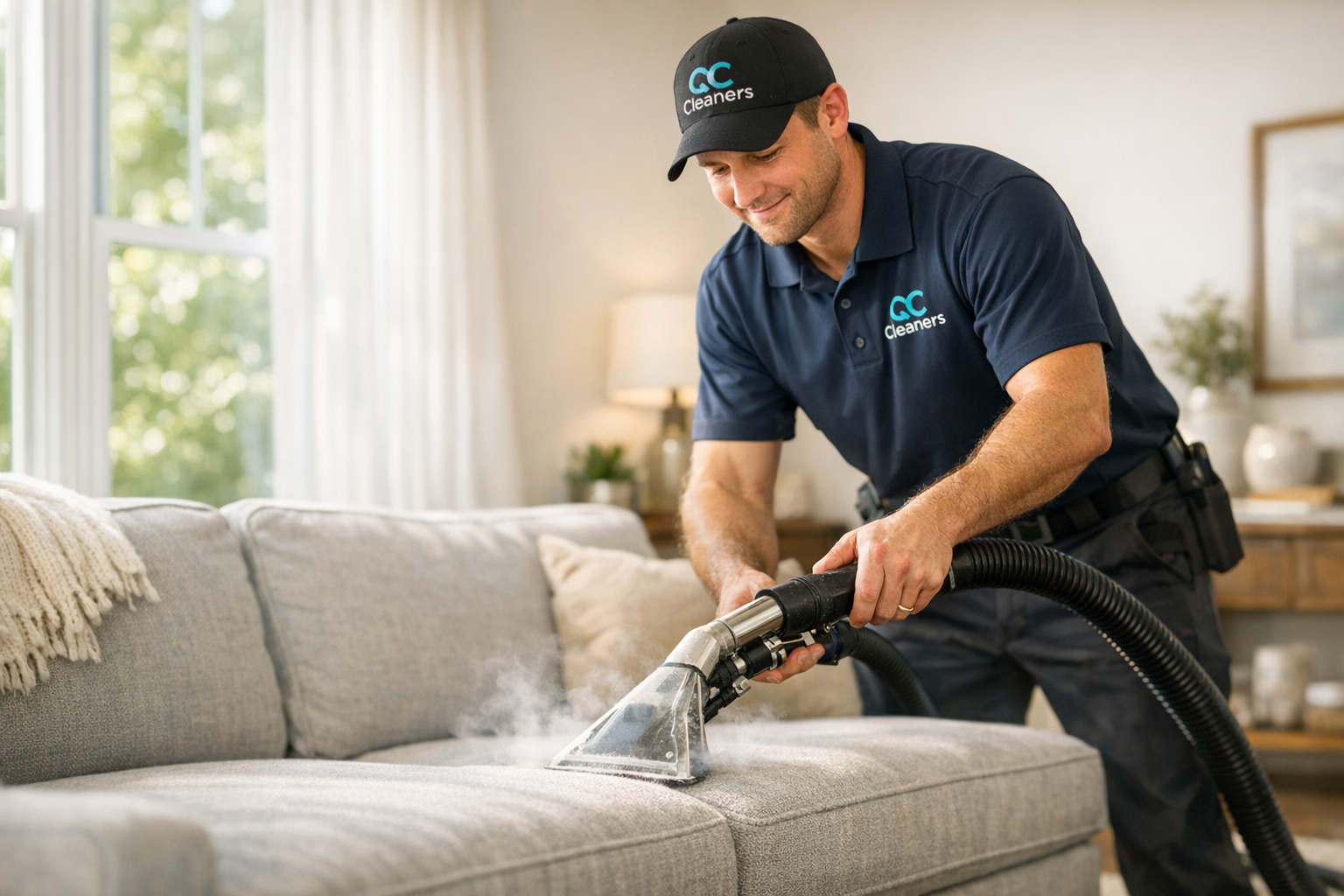
Our process goes well beyond surface treatment. Steam upholstery cleaning loosens and extracts dirt, allergens, and odor-causing bacteria from deep within the fabric and cushion fibers — the kind of buildup that builds up gradually and that household methods can't meaningfully reach. Most furniture is dry within a few hours, and the difference in appearance and smell is usually immediate.
We quote upfront so there are no surprises when the job is done. If you're not sure whether your furniture actually needs professional cleaning or just want an honest opinion, we'll tell you — no pressure to book if it isn't the right call.
Learn more about our process and the neighborhoods we serve at Velvo Upholstery Cleaning Charlotte.
Ready for upholstery that actually looks — and smells — clean again?
Velvo serves Charlotte NC and the surrounding region, including Fort Mill, Rock Hill, Gastonia, and Concord. Get a free, no-obligation quote and see what a professional clean actually removes: hellovelvo.com/upholstery-cleaning/charlotte
Frequently Asked Questions
How often should a sofa be professionally cleaned?
Most sofas should be professionally cleaned once every 12 months. Households with pets, young children, or allergy sufferers benefit from cleaning every 6 months. Heavily used furniture — office seating or sectionals with constant daily use — may need attention every 3 to 6 months to prevent fiber breakdown and maintain hygiene.
Can I clean my upholstery myself instead of hiring a professional?
DIY maintenance — vacuuming, blotting spills, brushing pet hair — handles surface-level care well and should be done regularly. But home methods can't replicate the extraction power of professional equipment. For deep cleaning, odor removal, or set-in stains, professional hot water extraction removes what home methods leave behind. Attempting aggressive DIY cleaning can also cause fabric shrinkage, water stains, or foam damage.
How long does upholstery take to dry after professional cleaning?
Professional upholstery cleaning typically dries within 2 to 4 hours. Good airflow and open windows speed up the process. Heavier fabrics or thick foam cushions may take closer to 6 hours in humid conditions. Your technician can give you a more specific estimate based on your fabric type and the conditions in your home.
Does professional upholstery cleaning actually remove allergens?
Yes — and for many households, this is the most important benefit. Hot water extraction removes dust mites, pet dander, pollen, and other allergens embedded in the fabric at a depth that vacuuming can't reach. Industry data indicates professional cleaning can eliminate the vast majority of trapped particles, including those too fine for standard filters to capture. For Charlotte households where pollen and humidity drive indoor allergen levels, this is worth prioritizing on a regular schedule.