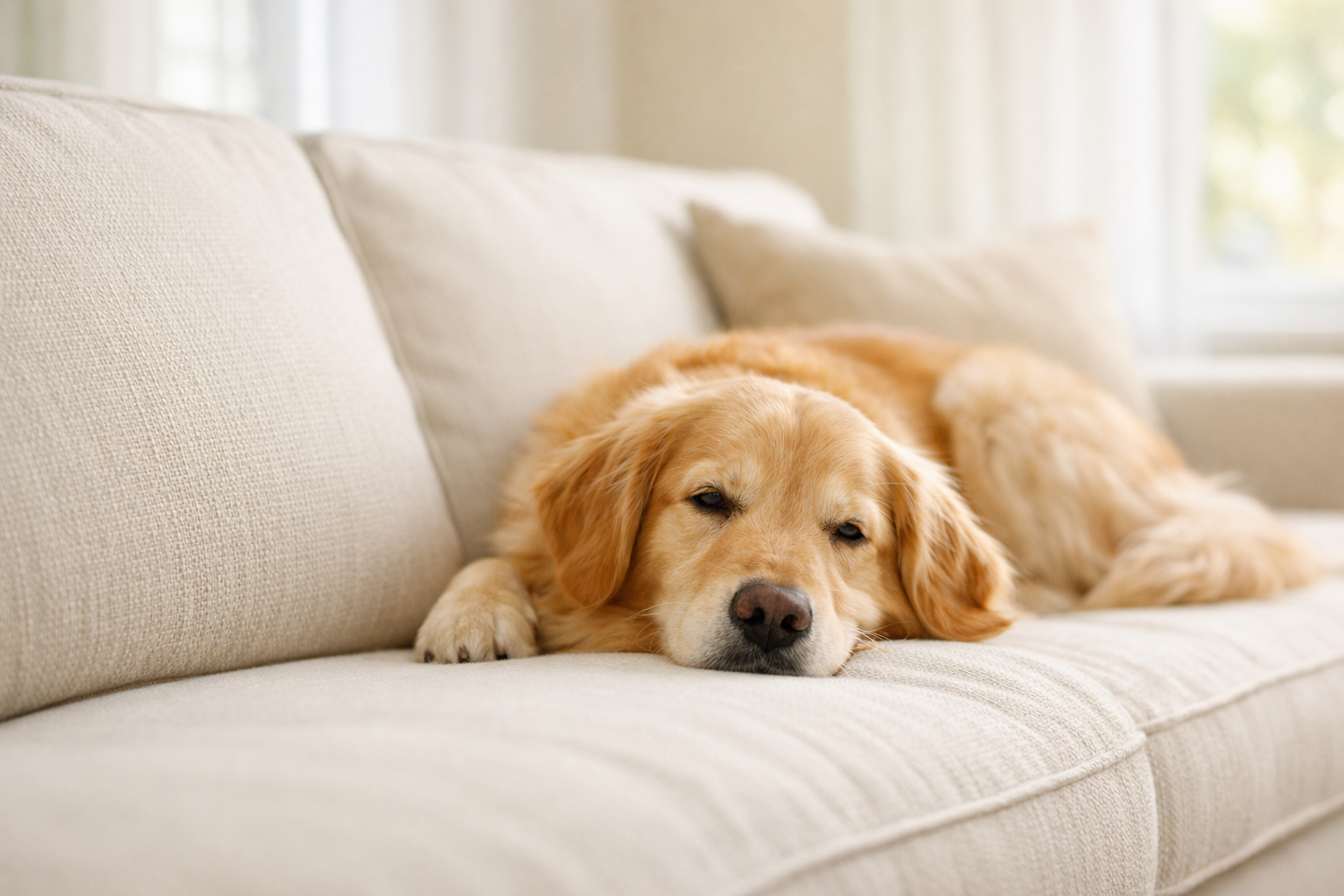
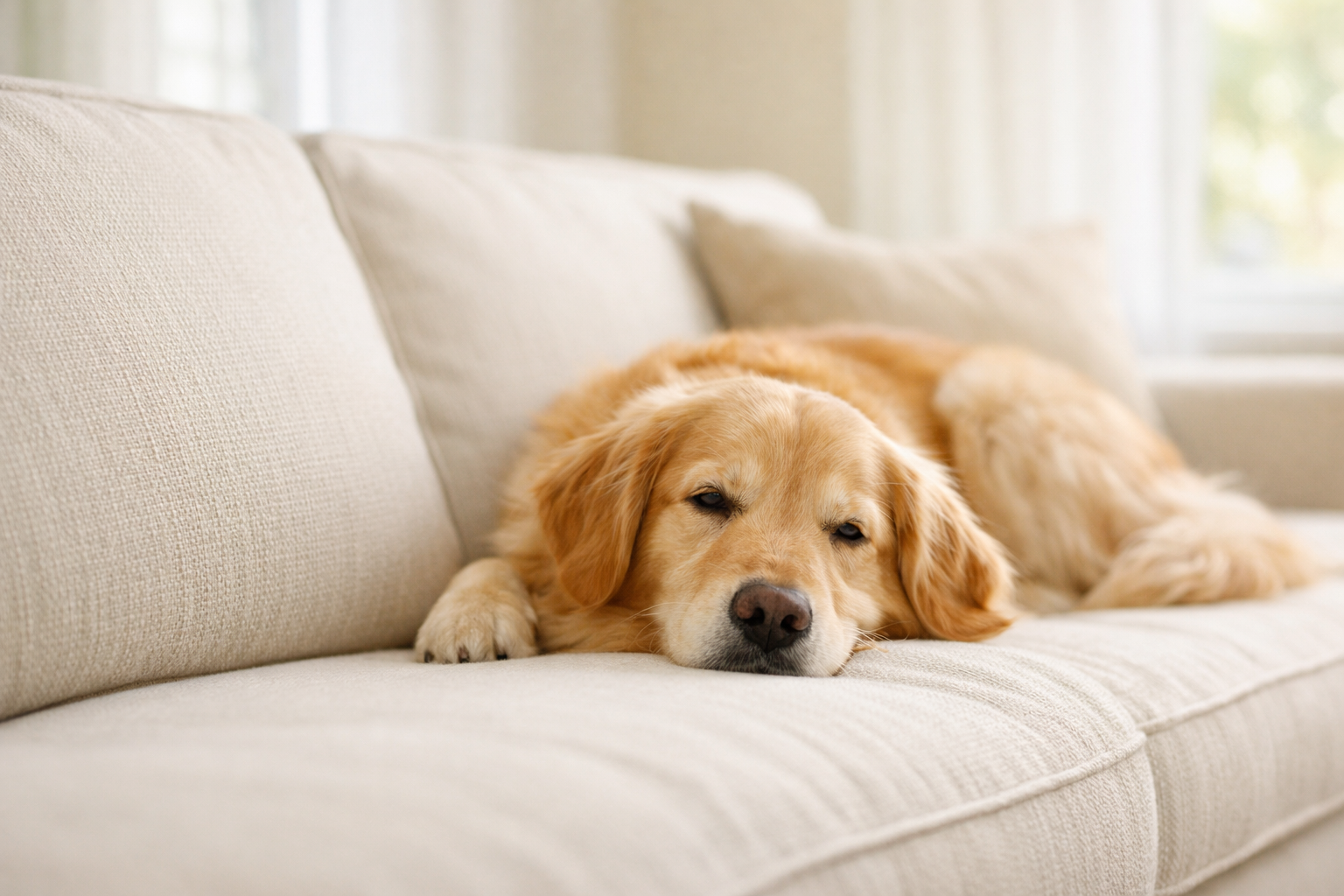
You vacuum the sofa. You light the candle. You open the windows. And still — the moment someone sits down, that familiar pet smell rises right back up. If you have a dog or cat in Rock Hill, you already know this battle. Pet odors don't just linger on the surface of your upholstery; they work their way deep into the fabric fibers, foam padding, and even the frame beneath. Standard cleaning products mask the problem temporarily, but they rarely solve it.
The good news is that there are real, effective ways to tackle this. Some you can do yourself this weekend. Others require professional help — and knowing which is which will save you a lot of wasted effort and money.
Pet odors trapped deep in sofa fibers won't come out with sprays and baking soda alone. Velvo's upholstery cleaning removes embedded odors, bacteria, and allergens from your furniture — leaving it fresh, not just temporarily masked. Get a Free Quote in Rock Hill
Why Pet Odors Are So Hard to Remove from Upholstery
The core issue is chemistry. Pet urine, dander, and body oils don't sit on top of fabric — they bond with it. When a dog or cat urinates on a couch, the liquid immediately begins wicking downward, saturating through the fabric layer, into the foam cushion, and sometimes reaching the frame material beneath. As it dries, the urea in the urine crystalizes. Those crystals are odorless when dry, but every time humidity rises — which happens often in York County's warm seasons — they reactivate and release that unmistakable ammonia smell all over again.
Pet dander is a separate problem entirely. It's microscopic and sticky, clinging to upholstery fibers even after vacuuming. Combined with saliva residue from a dog that loves the couch, you end up with a layered odor problem that no amount of Febreze will fully address.
According to the EPA, indoor air quality is significantly affected by biological contaminants like pet dander and urine residue — particularly in homes where ventilation is limited and upholstered furniture is heavily used. The problem compounds quietly over time.
What Makes Your Specific Situation Harder or Easier
Not every pet odor problem is the same. A few factors determine how difficult yours will be to resolve.
Fabric Type
Microfiber and synthetic blends tend to trap odors more aggressively than tightly woven natural fabrics. Velvet and chenille are particularly difficult — the looped pile structure holds dander and moisture in a way that resists surface cleaning. If you're not sure what your sofa is made of, check the tag on the cushion frame. The cleaning codes there (W, S, S/W, X) will also tell you what cleaning methods are safe to use.
How Long the Odor Has Been There
Fresh accidents are dramatically easier to address than old, set-in contamination. If your sofa has absorbed years of pet use — a dog who's always been allowed on the couch, a cat who occasionally uses it as a litter substitute — the odor is probably distributed throughout the cushion depth, not just the surface fabric. That's a different problem than a single incident you caught quickly.
Cushion Construction
Removable cushion covers that can be machine washed are a huge advantage. Attached cushions or cushions with non-removable covers limit your options considerably. Foam cores that have been saturated with urine multiple times may need to be replaced, not cleaned — no cleaning method will fully eliminate odor from a foam core that's been thoroughly contaminated.
Practical Steps to Remove Pet Odor from Upholstery at Home
Before reaching for a professional, there are legitimate steps worth trying — especially for moderate odors or recent incidents. Here's what actually works:
- Blot fresh accidents immediately. Don't rub — blot firmly with clean white cloths, working from the outside of the stain inward. Remove as much liquid as possible before it penetrates deeper. The faster you act, the less work you'll have to do later.
- Apply an enzyme-based cleaner. This is non-negotiable for pet urine odor. Regular cleaners don't break down the uric acid crystals that cause the smell — enzyme cleaners do. Products containing protease and urease enzymes are specifically designed to digest the organic compounds in pet waste. Saturate the area, let it dwell for the time listed on the product (usually 10–15 minutes), then blot dry. Don't skip the dwell time; that's where the actual chemistry happens.
- Let it dry completely before evaluating. Wet fabric always smells worse than dry fabric. A common mistake is declaring the treatment a failure before the area has fully dried. Give it 24 hours with good airflow before deciding whether you need to repeat.
- Apply baking soda after drying. Once dry, sprinkle a light layer of baking soda over the treated area and let it sit for several hours — or overnight. Baking soda is a mild odor absorber and helps pull any remaining surface-level compounds out of the fabric. Vacuum it thoroughly afterward with an upholstery attachment.
- Wash removable covers if possible. If your cushion covers come off, wash them according to the care label. Add a cup of white vinegar to the wash cycle — it neutralizes odors without damaging most fabrics. Air dry rather than using heat, which can set residual odors.
Quick tip: If you're unsure whether a cleaner is safe for your upholstery, test it on a hidden area first — the back panel or the underside of a cushion. Some enzyme cleaners can affect dye in certain fabrics.
For a deeper look at fabric-specific cleaning methods, our fabric couch cleaning guide covers different upholstery types in detail and can help you identify what approach fits your furniture.
When DIY Methods Won't Cut It
DIY enzyme treatments work well for recent incidents and moderate odor buildup. But there's a point where home cleaning simply can't reach the source of the problem. A few clear signs you've hit that limit:
- The odor returns within days of cleaning, especially when the room warms up or humidity rises
- The smell is coming from inside the cushion, not just the fabric surface
- You can see discoloration deep in the foam or padding when cushion covers are removed
- Multiple pets have used the sofa over several years
- The fabric is sensitive — velvet, antique upholstery, attached cushions — and you're worried about damage from DIY products
Deep foam contamination is where most homeowners run out of options. You can treat the fabric surface as many times as you want, but if the foam underneath has absorbed concentrated pet urine, the odor source is still there. Every time the cushion compresses under weight, it pushes contaminated air outward through the fabric. That's why some sofas seem to smell worse the more you sit on them.
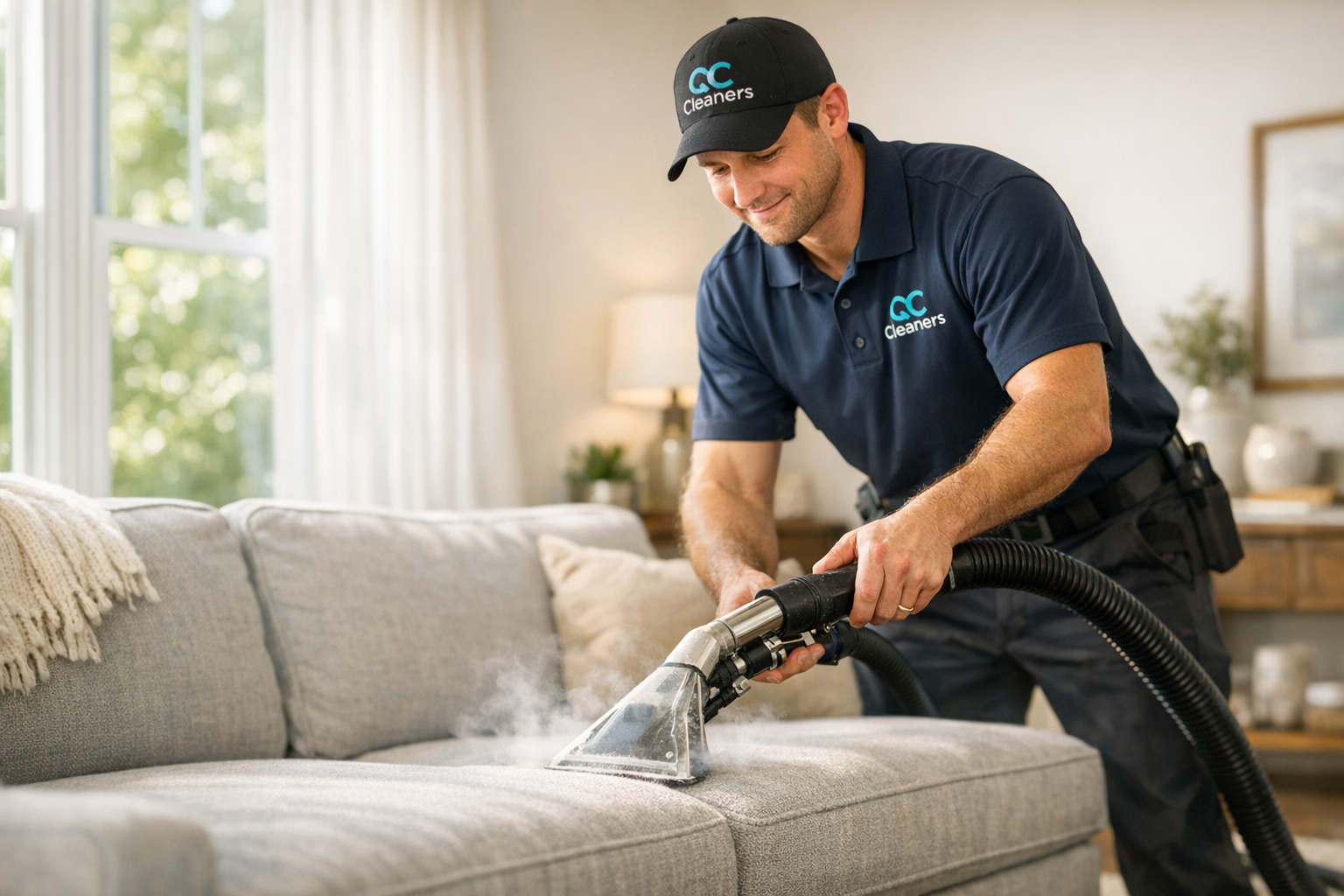
Professional upholstery cleaning uses hot water extraction and specialized enzyme treatments at a pressure and penetration depth that consumer products can't match. The IICRC — the Institute of Inspection, Cleaning and Restoration Certification, the standard-setting body for professional cleaners — recognizes enzyme-based extraction as the recommended approach for biological odor contamination in upholstered surfaces. Professional-grade treatment can remove up to 90% of embedded bacteria and odors from upholstery fibers, a result that's simply not achievable with store-bought products.
If the pet smell keeps coming back after cleaning, the source is deeper than surface products can reach. Velvo's professional upholstery cleaning uses enzyme extraction that penetrates into the cushion layer — removing the odor at its source, not just covering it up. Your sofa can actually smell clean again. See How Velvo's Upholstery Cleaning Works
Professional Upholstery Cleaning for Pet Owners in Rock Hill, SC
Rock Hill homes face a specific set of challenges when it comes to upholstery care. The humidity in York County — particularly through spring and summer — accelerates the reactivation of odor compounds in furniture. Homes near wooded areas also deal with pets tracking in allergens and organic material that adds to the contamination load on fabric furniture. If your sofa is in a main living area where pets spend most of their time, the buildup is likely substantial even if it doesn't smell severe yet.
Velvo serves Rock Hill and the surrounding York County area with professional upholstery cleaning designed specifically for these conditions. The process starts with a fabric assessment — identifying the material type, cleaning code, and contamination level — before any treatment begins. That step matters because the wrong cleaning method on the wrong fabric can cause shrinkage, color bleeding, or texture damage that makes the problem worse.
From there, pre-treatment with enzyme solutions begins the breakdown of pet odor compounds before hot water extraction pulls them out of the fiber. For severe cases, a secondary deodorizer application targets any residual odor at the molecular level. The result is upholstery that's genuinely clean — not just deodorized on the surface.
For more on what the full process looks like, the Rock Hill homeowner's guide to upholstery cleaning covers the service from start to finish. The complete upholstery cleaning guide is also worth a read for a broader look at fabric care standards.
Velvo provides professional upholstery cleaning in Rock Hill, Fort Mill, and Charlotte — with enzyme-based extraction that removes pet odors from the inside out. No masking. No temporary fixes. Request a free quote and get your sofa smelling clean again — for real this time. Schedule Upholstery Cleaning in Rock Hill →
Rock Hill is a community that takes pride in its homes — from the established neighborhoods near downtown to the newer developments along the Tega Cay corridor. The City of Rock Hill continues to grow, and with that growth comes more families, more pets, and more sofas that need real care. Velvo's local knowledge of the area means faster scheduling, familiarity with common home layouts, and a team that understands what York County homeowners actually deal with.
Frequently Asked Questions About Pet Odor Upholstery Cleaning in Rock Hill, SC
Will professional cleaning actually get rid of the smell, or just cover it up?
Professional upholstery cleaning uses enzyme-based solutions and hot-water extraction that break down uric acid crystals deep inside the foam — the actual source of the odor. Unlike sprays or deodorizers, this removes the contamination instead of masking it. At Velvo, we treat the fabric, padding, and cushion core so the smell doesn't come back when humidity rises.
How much does it cost to have a sofa professionally cleaned for pet odors in Rock Hill, SC?
Upholstery cleaning in the Rock Hill area typically ranges from $80–$200+ depending on sofa size, fabric type, and level of contamination. Heavily soiled pieces with deep foam saturation or multiple pets may require additional odor treatment. Contact Velvo for a free quote — we assess your specific situation before giving a number.
Can pet odor come back after professional cleaning?
If the foam core or frame beneath the fabric is deeply saturated, odor can return — especially on humid days in York County when urine crystals reactivate. A thorough professional cleaning eliminates this in most cases. For extreme saturation, we'll tell you upfront if cushion foam replacement is a better option than cleaning.
My couch is microfiber or velvet — can it still be cleaned safely for pet odors?
Yes, but fabric type matters a lot. Microfiber, velvet, and chenille require specific low-moisture techniques to avoid shrinking, watermarks, or pile damage. Velvo checks your fabric's care code before applying any solution and uses methods appropriate for sensitive upholstery.
How long will the sofa take to dry after cleaning?
Most upholstered pieces dry within 4–8 hours with good airflow. Velvet and thicker fabrics may take up to 24 hours. We use low-moisture extraction techniques that significantly reduce dry time — your sofa will be usable again the same day in most cases.
Does Velvo clean pet odors from sectionals and oversized sofas?
Yes. We clean all upholstery types — sectionals, L-shaped sofas, recliners, and oversized pieces. Pricing is based on the number of sections and the extent of contamination, not a flat rate. Text us at (843) 476-2925 for a fast quote based on your specific piece.
Is the cleaning solution safe for my pets and kids after the sofa dries?
All products we use are pet-safe and non-toxic once dry. We avoid harsh solvents or bleach-based agents that leave harmful residues on upholstery. Once the sofa is fully dry — typically the same day — it's completely safe for pets and children.
Can you remove both the stain and the odor at the same time, or are those separate services?
Stain removal and odor elimination are treated together in a single visit. Enzyme treatments that neutralize odor also lift most pet stains from the fabric. Stubborn set-in stains may need additional spot treatment, which we assess on-site — no hidden upcharges added after the fact.
My dog has used the sofa for years — is it too far gone to clean, or should I just replace it?
It depends on the foam core. If the padding has been saturated repeatedly without treatment, replacement may be more cost-effective than cleaning. But most sofas — even with years of pet use — respond well to professional deep cleaning. We'll give you an honest assessment before you commit to anything.
Do I need to be home during the cleaning, and how long does it take?
Most upholstery jobs take 1–2 hours depending on size and condition. You do need to be present for access and payment, but you're not required to supervise. We work efficiently so you can carry on with your day — no all-day appointment windows.