---
title: How to Clean an Area Rug the Right Way (Without Ruining It)
description: Learn how to clean an area rug without damaging it. Step-by-step guide for wool, synthetic, and oriental rugs — plus when to call a professional in Charlotte.
image: https://hellovelvo.com/hubfs/AI-Generated%20Media/Images/Plush%20Area%20Rug%20in%20Modern%20Living%20Room%20with%20Natural%20Light.png
---
[Carpet](https://hellovelvo.com/carpet-cleaning) [Upholstery](https://hellovelvo.com/upholstery-cleaning) [Area Rugs](https://hellovelvo.com/area-rug-cleaning) [Commercial](https://hellovelvo.com/commercial-carpet-cleaning) [Blog](https://hellovelvo.com/blog) [About](https://hellovelvo.com/about)
[Text for a quote →](sms:+18434762925?body=Hi%20Velvo!%20I%20would%20like%20to%20get%20a%20free%20quote%20for%20cleaning.)
how to clean an area rug · June 23, 2026 · 10 min read
# How to Clean an Area Rug the Right Way (Without Ruining It)
Paulo Sucesso
Owner · Velvo
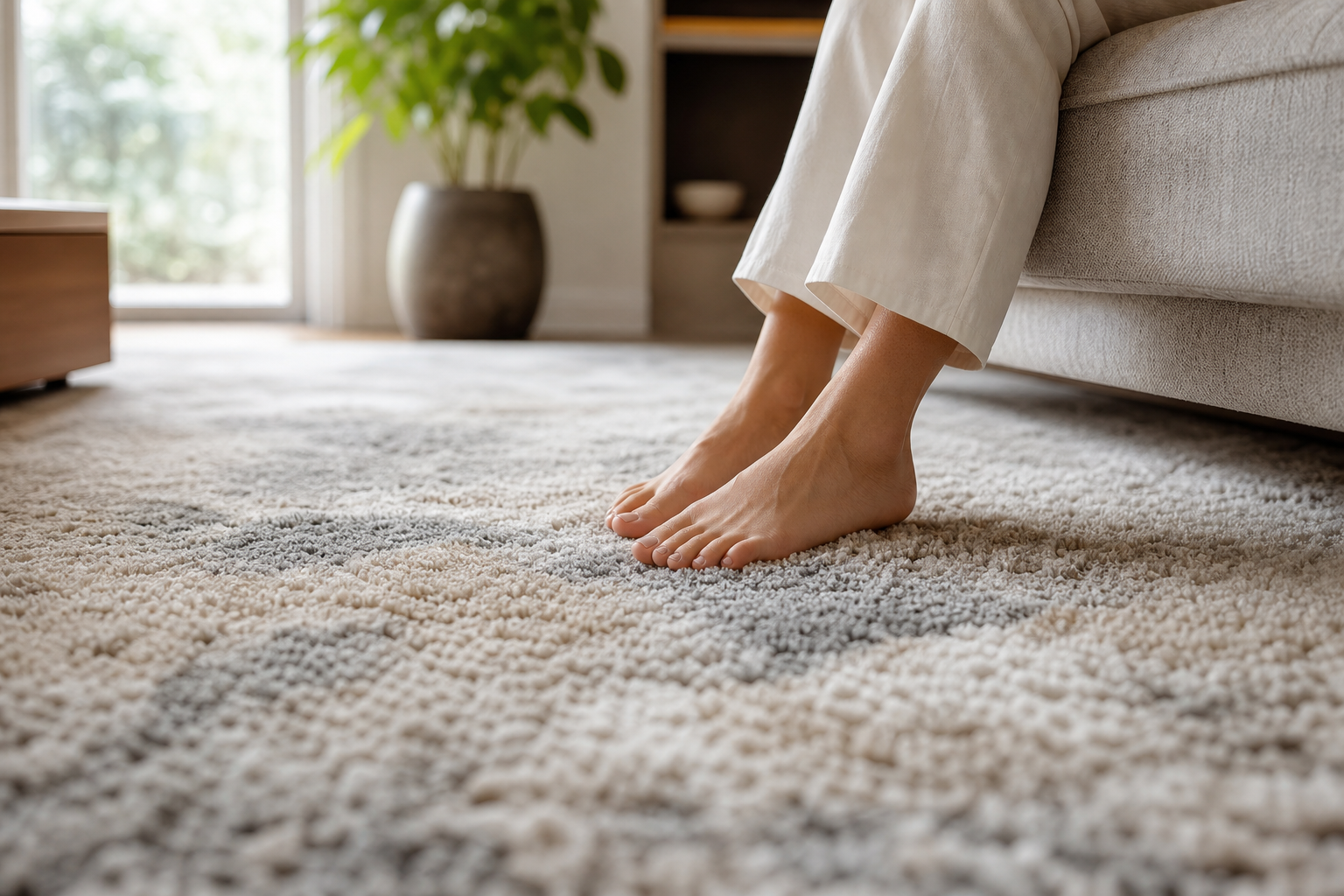
Area rugs take a beating. They sit in the highest-traffic spots in your home — the living room, the entryway, under the dining table — quietly collecting everything your family tracks in. Dirt, pet hair, food crumbs, pollen. In Charlotte homes especially, where humidity clings through summer and NC pollen season feels never-ending, rugs hold onto particles that a regular vacuum pass barely touches.
Here's what most homeowners don't realize: by the time a rug *looks* dirty, the buildup has been happening for months. And once you decide to clean it, the method matters as much as the timing. Apply the wrong technique to the wrong material and you can shrink it, bleed the dyes, or distort the pile permanently.
This guide walks you through how to clean an area rug properly — based on fiber type and what it's actually been through — so you can get it genuinely clean without the guesswork or the risk.
---
**Is your rug past the point of DIY?** Velvo's hot water extraction process removes deep-set dirt, pet odors, and allergens from synthetic and natural fiber rugs in Charlotte — without the risk of damage from the wrong method.[See our area rug cleaning service →](https://hellovelvo.com/area-rug-cleaning)
---
## **Why Rugs Get Dirtier Faster Than You Think**
A rug isn't just a floor covering — it's a filter. Fibers trap airborne particles and hold them near the floor, right where your kids play and your pets sleep. The Carpet and Rug Institute estimates that a single square yard of carpet or rug can hold up to a pound of dirt before it visibly looks soiled. By the time you notice the discoloration, the accumulation has been building for months.
Pet households face an extra layer of challenge. Urine, dander, and the oils from fur coat the fibers over time. Even synthetic rugs — which resist staining better than wool or natural fibers — can develop a persistent smell that surface cleaning never fully reaches. Charlotte's humidity makes this worse. Moisture trapped in rug fibers creates an environment where bacteria thrive, and that's usually what you're actually smelling long after the stain appears gone.
The fix isn't always *more* cleaning. It's the right kind of cleaning, applied to the right material.
---
## **Know Your Rug Before You Clean It**
This is where most DIY cleaning mistakes happen — applying a method that works perfectly on a synthetic polypropylene rug to a hand-knotted wool or oriental piece. Before you do anything, identify what you're working with.
**Synthetic rugs** (polypropylene, nylon, polyester) are the most forgiving. They resist moisture, dry faster, and can typically handle machine washing if small enough, or a thorough scrub-and-rinse outdoors.
**Wool rugs** need more care. Wool is naturally soil-resistant but sensitive to heat and alkaline cleaners — both can cause irreversible shrinkage or fiber damage. Always use a pH-neutral cleaning solution and keep the water cool.
**Oriental and hand-knotted rugs** — Persian, Turkish, Indian — are in a category of their own. Natural dyes can bleed when wet, and the knotting structure can loosen or warp with the wrong technique. If you own one of these, professional cleaning isn't a preference — it's the only safe option.
**Jute and sisal** should not get wet at all, or at minimum, must dry extremely fast. These natural fibers absorb moisture readily and mold quickly. Spot treat only, and act immediately.
---
## **How to Deep Clean an Area Rug at Home**
For synthetic and low-pile rugs in reasonable condition, a thorough DIY cleaning is achievable. Follow this sequence — skipping steps is where results fall short.
**1. Shake and vacuum both sides.** Take the rug outside if possible and give it a good shake. Let it settle, then vacuum the face side on a suction-only setting — avoid beater bars on any delicate pile. Flip it and vacuum the back. You'll likely be surprised how much loosened material comes out from underneath before you've added a drop of water.
**2. Test for colorfastness first.** Before applying any solution, dampen a hidden corner and press a white cloth against it firmly. If color transfers, stop. Any wet cleaning method risks bleeding the dyes, and that's damage no rinse will undo.
**3. Mix a gentle cleaning solution.** For most synthetic rugs, a small amount of dish soap or gentle carpet shampoo diluted in cool water is sufficient. Avoid bleach, ammonia-based products, or anything with strong alkalinity if you're uncertain about fiber content. When in doubt, go milder.
**4. Scrub gently, work in sections.** Apply the solution with a soft-bristle brush, always working in the direction of the pile — never against it. The goal is agitation, not saturation. Excessive moisture is how you end up with mildew, backing separation, or warping. Overlap your passes slightly so no area is missed.
**5. Rinse until the water runs clear.** This step gets skipped or rushed more than any other — and it's where residue problems start. Leftover soap accelerates re-soiling because it attracts new dirt. Rinse thoroughly with clean water using a garden hose or clean damp cloths, and keep going until there's no visible suds.
**6. Dry completely before putting it back.** Hang the rug or lay it flat somewhere with good airflow. Never return it to the floor while damp — moisture trapped between the rug and hard flooring invites mold growth fast, especially during Charlotte summers. Expect 24–48 hours depending on pile thickness and humidity that day.
---
## **When DIY Cleaning Isn't Enough**
Home cleaning handles the surface layer. What it can't do is pull the fine particulate matter, allergens, and biological residue that lives deep in the pile — bonded to fibers through friction, pet activity, and months of foot traffic.
The[IICRC](https://www.iicrc.org/) (Institute of Inspection, Cleaning and Restoration Certification) recommends professional rug cleaning every 12–18 months for most households, and more frequently in homes with pets or allergy sufferers. That cadence reflects how rug fibers actually accumulate contaminants — not how often they *look* dirty.
Watch for these signs that you've moved past what DIY can address:
- **Odor that returns after cleaning** — pet urine especially, since uric acid crystals bond to fibers and reactivate with moisture
- **Stains that reappear as the rug dries** — a reliable indicator of deep contamination wicking back to the surface
- **Fiber flattening or matting** in high-traffic zones that vacuuming doesn't restore
- **Visible soiling at the base of fibers** even after a thorough surface clean
Wool and oriental rugs carry an additional risk: attempting a deep clean at home can cause fiber shrinkage, color run, or backing delamination — damage that's permanent and often expensive to repair professionally.
---
**Surface cleaning only goes so far.** If your rug still smells, still looks dull, or keeps showing stains after drying, the contamination is deeper than any scrub brush can reach. Velvo's hot water extraction at 200°F pulls it out from the base of the pile — the same method approved by Shaw, Mohawk, and Stainmaster. Paulo and Digiorgia handle every job personally. No subcontractors.[Book your area rug cleaning in Charlotte →](https://hellovelvo.com/area-rug-cleaning)
---
## **Professional Area Rug Cleaning in Charlotte**
Charlotte homeowners deal with a combination that most cleaning methods weren't built for: red clay soil tracked in from outside, high summer humidity that keeps moisture trapped in fibers long after cleaning, and one of the longest pollen seasons in the Southeast. These aren't generic cleaning challenges — they compound over time inside the pile.
Velvo's[area rug cleaning service in Charlotte](https://hellovelvo.com/area-rug-cleaning/charlotte) uses the Barefoot Clean Protocol™ — a five-step process that opens with a hands-on pre-inspection to assess fiber type, soiling level, and any risk areas before a drop of water touches the rug. Enzyme pre-treatment follows, targeting organic residue by type. The process closes with hot water extraction at 200°F, which drives cleaning solution deep into the pile and extracts it — along with whatever it's broken down — rather than leaving residue behind for fibers to reabsorb.
That last step is the difference between a rug that looks clean and one that actually is.
For a broader look at rug care by material and season, the[complete area rug cleaning guide](https://hellovelvo.com/blog/area-rug-cleaning-guide) covers maintenance cycles for every fiber type. If stain removal is your primary concern,[this article on removing stains from area rugs](https://hellovelvo.com/blog/remove-stains-area-rug) goes deeper by stain category. And if you're wondering how frequently your specific rug actually needs professional attention,[this cleaning frequency guide](https://hellovelvo.com/blog/how-often-clean-area-rug) breaks it down by household type and use.
---
## **Get Your Area Rug Professionally Cleaned**
If your rug has absorbed a year of pets, kids, and Charlotte pollen — or if you want it restored without gambling on the wrong DIY method — Velvo is ready to help.
*"Clean enough to sit barefoot."* That's not a tagline Paulo and Digiorgia say lightly. It's the standard they bring to every job, in person, every time.
[Schedule area rug cleaning in Charlotte →](https://hellovelvo.com/area-rug-cleaning/charlotte) or call **(843) 476-2925**.
---
## **Frequently Asked Questions**
**Can you clean an area rug at home without a machine?** Yes — for most synthetic rugs, a soft-bristle brush, a pH-neutral cleaning solution, and thorough rinsing is sufficient. The most important steps are avoiding oversaturation during cleaning and ensuring the rug dries completely before going back on the floor. Wool, silk, and hand-knotted rugs should not be wet-cleaned at home due to the risk of shrinkage and dye bleeding.
**How do you get pet urine smell out of an area rug?** Surface cleaning won't eliminate pet urine odor. Uric acid crystals bond to carpet fibers and reactivate every time humidity rises — which is why the smell keeps coming back. Effective treatment requires enzymatic solution to break down the organic compounds at the source. For deep or repeated contamination, professional hot water extraction is the only method that reliably removes it.
**How long does an area rug take to dry after cleaning?** A thin synthetic rug typically dries in 6–10 hours with good airflow. Thicker rugs, wool, or rugs cleaned during Charlotte's humid summer months can take 24–48 hours. Never return a rug to the floor while still damp — trapped moisture between the rug backing and the floor creates ideal conditions for mold to develop underneath.
**How often should area rugs be professionally cleaned?** The[Carpet and Rug Institute](https://carpet-rug.org/) recommends professional cleaning every 12–18 months for most households. Homes with pets, young children, or allergy sufferers benefit from annual cleaning. High-traffic rugs — entryways, living rooms, dining areas — may need it more frequently depending on use.[See the full cleaning frequency guide →](https://hellovelvo.com/blog/how-often-clean-area-rug)
[how to clean an area rug](https://hellovelvo.com/blog/tag/how-to-clean-an-area-rug) [Pet Stains](https://hellovelvo.com/blog/tag/pet-stains) [Area Rug Cleaning](https://hellovelvo.com/blog/tag/area-rug-cleaning) [Charlotte NC](https://hellovelvo.com/blog/tag/charlotte-nc) [DIY Cleaning](https://hellovelvo.com/blog/tag/diy-cleaning) [Rug Care Tips](https://hellovelvo.com/blog/tag/rug-care-tips)
“The person on the phone is the person doing the job.”
[Text Paulo for an exact quote →](sms:+18434762925?body=Hi%20Paulo,%20I%27d%20like%20a%20quote.%20Can%20you%20help?)
Keep reading
## Related *articles.*
### [ upholstery cleaning Upholstery Cleaning in Rock Hill SC: A Homeowner's Guide to Cleaner Have you ever flipped a couch cushion and noticed the underside looks like a completely different color? That contrast ... Read →](https://hellovelvo.com/blog/upholstery-cleaning-rock-hill-homeowners-guide)
### [ upholstery cleaning Move Out Upholstery Cleaning in Fort Mill: How to Get Your Full Deposit Back Read →](https://hellovelvo.com/blog/move-out-upholstery-cleaning-fort-mill)
### [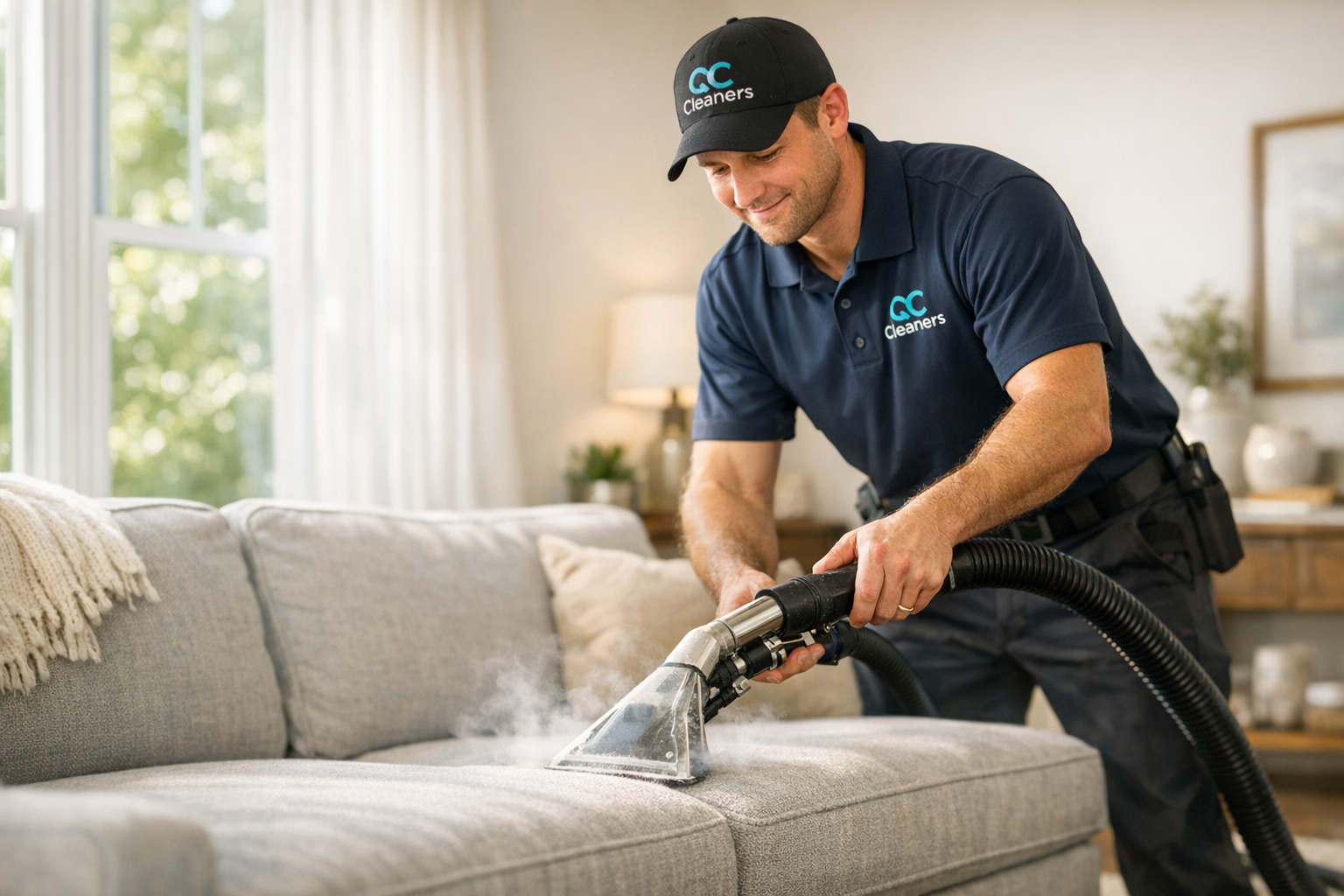 upholstery cleaning How Often Should Upholstery Be Cleaned? A Practical Guide for Charlotte Homeowners Your sofa is probably one of the most-used pieces of furniture in your home. It's where the family gathers after ... Read →](https://hellovelvo.com/blog/how-often-clean-upholstery)
[← Previous The Complete Area Rug Cleaning Guide for Homeowners in the Carolinas](https://hellovelvo.com/blog/area-rug-cleaning-guide) [Next → How to Remove Stains from Area Rugs (Without Ruining the Fibers)](https://hellovelvo.com/blog/remove-stains-area-rug)
"Clean enough to sit barefoot."
Book in 60 seconds
[Text for Quote](sms:+18434762925?body=Hi%20Velvo!%20I%20would%20like%20to%20get%20a%20free%20quote%20for%20cleaning.)
Or call — [(843) 476-2925](tel:+18434762925)
Services
- [Carpet cleaning](https://hellovelvo.com/carpet-cleaning)
- [Upholstery](https://hellovelvo.com/upholstery-cleaning)
- [Area rugs](https://hellovelvo.com/area-rug-cleaning)
- [Commercial](https://hellovelvo.com/commercial-carpet-cleaning)
Where we work
- Fort Mill SC
- Rock Hill SC
- Charlotte NC
- [All areas →](https://hellovelvo.com/areas-we-serve)
The company
- [About Paulo & Digiorgia](https://hellovelvo.com/about)
- [Our Story](https://hellovelvo.com/about/our-story)
- [Barefoot Clean Protocol™](https://hellovelvo.com/about/how-we-work)
- [Journal](https://hellovelvo.com/blog)
Reach us
- [(843) 476-2925](tel:+18434762925)
- [hello@hellovelvo.com](mailto:hello@hellovelvo.com)
- 510 Brafferton Pl, Fort Mill SC
- Mon–Fri 8a–9p · Sat 8a–2p
Follow
© 2026 Velvo LLC · Family-owned · Manaus → Fort Mill [Privacy](https://hellovelvo.com/privacy-policy) · [Terms](https://hellovelvo.com/terms-of-use)
```json
{
"@context" : "https://schema.org",
"@type" : "BlogPosting",
"author" : {
"@type" : "Person",
"name" : "Paulo Sucesso",
"url" : "https://hellovelvo.com/blog/author/paulo-sucesso"
},
"dateModified" : "2026-06-23T13:44:35.734Z",
"datePublished" : "2026-06-23T13:44:35.000Z",
"headline" : "How to Clean an Area Rug the Right Way (Without Ruining It)",
"image" : [ "https://hellovelvo.com/hubfs/AI-Generated%20Media/Images/Plush%20Area%20Rug%20in%20Modern%20Living%20Room%20with%20Natural%20Light.png" ],
"mainEntityOfPage" : {
"@id" : "https://hellovelvo.com/blog/how-clean-area-rug",
"@type" : "WebPage"
},
"publisher" : {
"@type" : "Organization",
"logo" : {
"@type" : "ImageObject",
"url" : "https://hellovelvo.com/hubfs/Logo-velvo-Wordmark.png"
},
"name" : "Velvo | Carpet And Upholstery Cleaning"
}
}
```
```json
{
"@context" : "https://schema.org",
"@id" : "https://hellovelvo.com/#localbusiness",
"@type" : "LocalBusiness",
"address" : {
"@type" : "PostalAddress",
"addressCountry" : "US",
"addressLocality" : "Fort Mill",
"addressRegion" : "SC",
"postalCode" : "29708",
"streetAddress" : "510 Brafferton Pl"
},
"aggregateRating" : {
"@type" : "AggregateRating",
"bestRating" : "5",
"ratingValue" : "5.0",
"reviewCount" : "20",
"worstRating" : "1"
},
"areaServed" : [ {
"@type" : "City",
"name" : "Charlotte"
}, {
"@type" : "City",
"name" : "Fort Mill"
}, {
"@type" : "City",
"name" : "Rock Hill"
} ],
"description" : "Professional carpet and upholstery cleaning services. Expert stain removal and deep cleaning serving Charlotte, NC, Fort Mill, SC, and surrounding areas.",
"geo" : {
"@type" : "GeoCoordinates",
"latitude" : 35.0346,
"longitude" : -80.9723
},
"image" : "https://hellovelvo.com/hubfs/Logo-velvo-Wordmark.png",
"name" : "Velvo | Carpet and Upholstery Cleaning",
"openingHoursSpecification" : [ {
"@type" : "OpeningHoursSpecification",
"closes" : "21:00",
"dayOfWeek" : [ "Monday", "Tuesday", "Wednesday", "Thursday", "Friday" ],
"opens" : "08:00"
}, {
"@type" : "OpeningHoursSpecification",
"closes" : "14:00",
"dayOfWeek" : [ "Saturday" ],
"opens" : "08:00"
} ],
"priceRange" : "$$",
"review" : [ {
"@type" : "Review",
"author" : {
"@type" : "Person",
"name" : "Angie Toth"
},
"datePublished" : "2026-06-01",
"itemReviewed" : {
"@type" : "LocalBusiness",
"name" : "Velvo | Carpet and Upholstery Cleaning"
},
"reviewBody" : "We had a great experience with Velvo. The team was professional, friendly, and arrived on time. They did an excellent job cleaning our carpets. The process was smooth and efficient. We highly recommend Velvo.",
"reviewRating" : {
"@type" : "Rating",
"bestRating" : "5",
"ratingValue" : "5"
}
}, {
"@type" : "Review",
"author" : {
"@type" : "Person",
"name" : "James Wright"
},
"datePublished" : "2026-05-12",
"itemReviewed" : {
"@type" : "LocalBusiness",
"name" : "Velvo | Carpet and Upholstery Cleaning"
},
"reviewBody" : "Great job, on time and polite did excellent work. I highly recommend Velvo carpet cleaning. He cleaned our carpets and couch. Just did an awesome job.",
"reviewRating" : {
"@type" : "Rating",
"bestRating" : "5",
"ratingValue" : "5"
}
}, {
"@type" : "Review",
"author" : {
"@type" : "Person",
"name" : "Carolina Acosta"
},
"datePublished" : "2026-04-21",
"itemReviewed" : {
"@type" : "LocalBusiness",
"name" : "Velvo | Carpet and Upholstery Cleaning"
},
"reviewBody" : "Thank you, Paulo - Velvo Carpet Cleaning, for your excellent work. You are kind, honest, and truly dedicated. My carpets look like new again. I highly recommend your services!",
"reviewRating" : {
"@type" : "Rating",
"bestRating" : "5",
"ratingValue" : "5"
}
}, {
"@type" : "Review",
"author" : {
"@type" : "Person",
"name" : "Jackie Raichandani"
},
"datePublished" : "2026-04-21",
"itemReviewed" : {
"@type" : "LocalBusiness",
"name" : "Velvo | Carpet and Upholstery Cleaning"
},
"reviewBody" : "They did an amazing job very professional.",
"reviewRating" : {
"@type" : "Rating",
"bestRating" : "5",
"ratingValue" : "5"
}
}, {
"@type" : "Review",
"author" : {
"@type" : "Person",
"name" : "M Houssman"
},
"datePublished" : "2026-04-07",
"itemReviewed" : {
"@type" : "LocalBusiness",
"name" : "Velvo | Carpet and Upholstery Cleaning"
},
"reviewBody" : "Velvo did a great job. Very good communication and pricing. They cleaned our carpet on the second floor and now it looks like new. No stains or odors!",
"reviewRating" : {
"@type" : "Rating",
"bestRating" : "5",
"ratingValue" : "5"
}
}, {
"@type" : "Review",
"author" : {
"@type" : "Person",
"name" : "Jessie Hollett"
},
"datePublished" : "2026-01-26",
"itemReviewed" : {
"@type" : "LocalBusiness",
"name" : "Velvo | Carpet and Upholstery Cleaning"
},
"reviewBody" : "We had a wonderful experience having our sectional couch cleaned with Velvo. Very kind and hardworking husband and wife team with heavy duty professional gear.",
"reviewRating" : {
"@type" : "Rating",
"bestRating" : "5",
"ratingValue" : "5"
}
}, {
"@type" : "Review",
"author" : {
"@type" : "Person",
"name" : "Elizabeth Lambert"
},
"datePublished" : "2026-01-26",
"itemReviewed" : {
"@type" : "LocalBusiness",
"name" : "Velvo | Carpet and Upholstery Cleaning"
},
"reviewBody" : "Paulo did an excellent job on our family room carpet and 2 upholstered chairs. He was very polite and very professional. I highly recommend him!",
"reviewRating" : {
"@type" : "Rating",
"bestRating" : "5",
"ratingValue" : "5"
}
}, {
"@type" : "Review",
"author" : {
"@type" : "Person",
"name" : "Jmatt17 M"
},
"datePublished" : "2026-01-19",
"itemReviewed" : {
"@type" : "LocalBusiness",
"name" : "Velvo | Carpet and Upholstery Cleaning"
},
"reviewBody" : "Carpets came out clean and fresh. Appreciate the hard work!",
"reviewRating" : {
"@type" : "Rating",
"bestRating" : "5",
"ratingValue" : "5"
}
}, {
"@type" : "Review",
"author" : {
"@type" : "Person",
"name" : "Nina Cymone"
},
"datePublished" : "2025-06-07",
"itemReviewed" : {
"@type" : "LocalBusiness",
"name" : "Velvo | Carpet and Upholstery Cleaning"
},
"reviewBody" : "Loved the service!",
"reviewRating" : {
"@type" : "Rating",
"bestRating" : "5",
"ratingValue" : "5"
}
}, {
"@type" : "Review",
"author" : {
"@type" : "Person",
"name" : "Starz Starz"
},
"datePublished" : "2025-04-30",
"itemReviewed" : {
"@type" : "LocalBusiness",
"name" : "Velvo | Carpet and Upholstery Cleaning"
},
"reviewBody" : "I had my carpets and staircases done today by Paulo. They did an excellent job. Everything looks brand new and smells fresh. I highly recommend them for your home!",
"reviewRating" : {
"@type" : "Rating",
"bestRating" : "5",
"ratingValue" : "5"
}
}, {
"@type" : "Review",
"author" : {
"@type" : "Person",
"name" : "Paloma Fontes"
},
"datePublished" : "2025-04-21",
"itemReviewed" : {
"@type" : "LocalBusiness",
"name" : "Velvo | Carpet and Upholstery Cleaning"
},
"reviewBody" : "Very good service and they are kind. I really recommend!",
"reviewRating" : {
"@type" : "Rating",
"bestRating" : "5",
"ratingValue" : "5"
}
}, {
"@type" : "Review",
"author" : {
"@type" : "Person",
"name" : "Henrique Bisneto"
},
"datePublished" : "2025-03-28",
"itemReviewed" : {
"@type" : "LocalBusiness",
"name" : "Velvo | Carpet and Upholstery Cleaning"
},
"reviewBody" : "Thank you for the excellent work on my home. I highly recommend it.",
"reviewRating" : {
"@type" : "Rating",
"bestRating" : "5",
"ratingValue" : "5"
}
}, {
"@type" : "Review",
"author" : {
"@type" : "Person",
"name" : "Elham Mori"
},
"datePublished" : "2024-12-30",
"itemReviewed" : {
"@type" : "LocalBusiness",
"name" : "Velvo | Carpet and Upholstery Cleaning"
},
"reviewBody" : "I couldn't be happier with the service I received from Paulo! They went above and beyond to make sure my carpets looked brand new. The team was punctual, professional, and incredibly thorough. They were able to remove stains I thought would never come out and left my home smelling fresh and clean. I highly recommend them to anyone looking for top-notch carpet cleaning.",
"reviewRating" : {
"@type" : "Rating",
"bestRating" : "5",
"ratingValue" : "5"
}
}, {
"@type" : "Review",
"author" : {
"@type" : "Person",
"name" : "Ram Mogili"
},
"datePublished" : "2024-11-23",
"itemReviewed" : {
"@type" : "LocalBusiness",
"name" : "Velvo | Carpet and Upholstery Cleaning"
},
"reviewBody" : "Paulo provided an excellent service, definitely recommend.",
"reviewRating" : {
"@type" : "Rating",
"bestRating" : "5",
"ratingValue" : "5"
}
}, {
"@type" : "Review",
"author" : {
"@type" : "Person",
"name" : "YH Wright"
},
"datePublished" : "2024-11-09",
"itemReviewed" : {
"@type" : "LocalBusiness",
"name" : "Velvo | Carpet and Upholstery Cleaning"
},
"reviewBody" : "I recently had the pleasure of using this carpet cleaning service for my home, and I can't recommend them highly enough! The booking process was incredibly straightforward. When the team arrived, they were punctual, professional, and well-equipped. My carpets, which had seen years of wear and tear, looked brand new. They tackled stubborn stains and odors with ease. I will definitely be using them again in the future!",
"reviewRating" : {
"@type" : "Rating",
"bestRating" : "5",
"ratingValue" : "5"
}
}, {
"@type" : "Review",
"author" : {
"@type" : "Person",
"name" : "Kate Duncan"
},
"datePublished" : "2024-11-07",
"itemReviewed" : {
"@type" : "LocalBusiness",
"name" : "Velvo | Carpet and Upholstery Cleaning"
},
"reviewBody" : "Very kind, professional, and reasonably priced father-and-son team. They responded quickly and did a fantastic job on our carpets! Highly recommend!",
"reviewRating" : {
"@type" : "Rating",
"bestRating" : "5",
"ratingValue" : "5"
}
}, {
"@type" : "Review",
"author" : {
"@type" : "Person",
"name" : "Gabriel Queiroz"
},
"datePublished" : "2024-10-23",
"itemReviewed" : {
"@type" : "LocalBusiness",
"name" : "Velvo | Carpet and Upholstery Cleaning"
},
"reviewBody" : "Velvo was one of the best experiences I've had with carpet cleaning. They are extremely detail-oriented. My apartment looks brand new. I highly recommend Velvo!",
"reviewRating" : {
"@type" : "Rating",
"bestRating" : "5",
"ratingValue" : "5"
}
}, {
"@type" : "Review",
"author" : {
"@type" : "Person",
"name" : "Cris Alberto"
},
"datePublished" : "2024-10-23",
"itemReviewed" : {
"@type" : "LocalBusiness",
"name" : "Velvo | Carpet and Upholstery Cleaning"
},
"reviewBody" : "The best carpet clean company ever. I was about to replace the carpet of my whole home and I decided to give it a chance and now my house smells fresh and clean and I save thousands of dollars. They are very professional and finish the service on time.",
"reviewRating" : {
"@type" : "Rating",
"bestRating" : "5",
"ratingValue" : "5"
}
}, {
"@type" : "Review",
"author" : {
"@type" : "Person",
"name" : "Susan"
},
"datePublished" : "2024-10-11",
"itemReviewed" : {
"@type" : "LocalBusiness",
"name" : "Velvo | Carpet and Upholstery Cleaning"
},
"reviewBody" : "These guys are the bomb! The carpet is like new and smells so good. They were prompt and courteous. Will definitely use them again!",
"reviewRating" : {
"@type" : "Rating",
"bestRating" : "5",
"ratingValue" : "5"
}
}, {
"@type" : "Review",
"author" : {
"@type" : "Person",
"name" : "Fabio Nolasco"
},
"datePublished" : "2024-10-11",
"itemReviewed" : {
"@type" : "LocalBusiness",
"name" : "Velvo | Carpet and Upholstery Cleaning"
},
"reviewBody" : "Very professional team and excellent prices! I highly recommend their services.",
"reviewRating" : {
"@type" : "Rating",
"bestRating" : "5",
"ratingValue" : "5"
}
} ],
"sameAs" : [ "https://www.instagram.com/hello.velvo/", "https://www.facebook.com/hello.velvo", "https://wa.me/18434762925", "https://www.linkedin.com/company/velvo", "https://nextdoor.com/page/velvo-carpet-and-upholstery-cleaning-fort-mill-sc", "https://x.com/HelloVelvo", "https://www.tiktok.com/@hello.velvo", "https://www.youtube.com/@hellovelvo", "https://www.pinterest.com/hellovelvo/", "https://www.threads.com/@hello.velvo", "https://share.google/EansHPzC1FQkYuDwz" ],
"telephone" : "+1-843-476-2925",
"url" : "https://hellovelvo.com/"
}
```