---
title: How Often Should You Clean Area Rugs | Velvo Charlotte
description: Not sure how often to clean your area rugs? Learn the right schedule based on pets, traffic, and fiber type — plus when professional cleaning is the only fix.
image: https://hellovelvo.com/hubfs/AI-Generated%20Media/Images/Luxury%20Living%20Room%20with%20Textured%20Area%20Rug%20and%20Natural%20Light.png
---
[Carpet](https://hellovelvo.com/carpet-cleaning) [Upholstery](https://hellovelvo.com/upholstery-cleaning) [Area Rugs](https://hellovelvo.com/area-rug-cleaning) [Commercial](https://hellovelvo.com/commercial-carpet-cleaning) [Blog](https://hellovelvo.com/blog) [About](https://hellovelvo.com/about)
[Text for a quote →](sms:+18434762925?body=Hi%20Velvo!%20I%20would%20like%20to%20get%20a%20free%20quote%20for%20cleaning.)
rug cleaning frequency · July 14, 2026 · 10 min read
# How Often Should You Clean Area Rugs — And What Happens When You Don't
Paulo Sucesso
Owner · Velvo
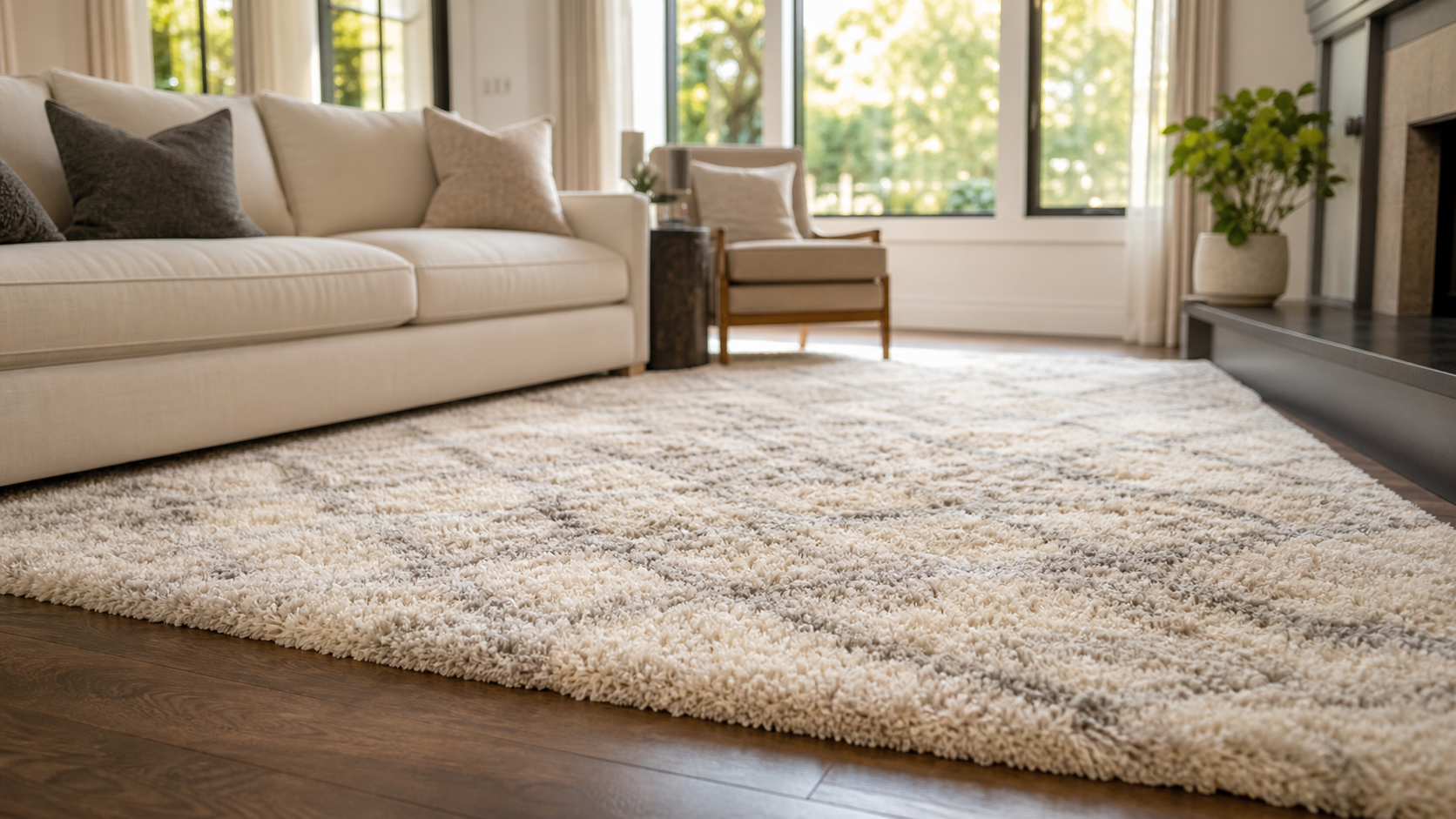
Most area rugs get vacuumed occasionally and deep cleaned almost never. It's not laziness — it's that nobody tells you there's a schedule to follow. Once a year? Every few months? Only when something spills?
Area rugs take a beating. They sit under the dining table, in the middle of the living room, at the foot of the bed — catching everything that falls, walks, or sheds in your home. And unlike wall-to-wall carpet, they're moved around, layered over other floors, and often forgotten about until something smells off or a stain won't go away.
If you have pets, kids, or a home that gets real use, that uncertainty adds up quickly. Dirt, pet dander, dust mites, and allergens don't wait for a convenient schedule. They settle deep into the fibers long before the rug looks dirty.
This guide gives you a clear answer: how often you should clean your area rugs, what factors change that number, and when professional cleaning is the only thing that actually works.
---
**Rugs in Charlotte looking dull, flat, or holding onto odors?** Velvo removes embedded dirt, pet hair, and allergens from wool and synthetic rugs using hot water extraction at 200°F — deep enough to reach the backing, gentle enough for delicate fibers. [Get a free estimate →](https://hellovelvo.com/area-rug-cleaning)
---
## Why Area Rugs Get Dirty Faster Than You Think
Rug fibers are engineered to trap particles — that's part of what makes them effective at improving air quality and protecting your floors. But that same trapping ability works against you over time. The fibers hold onto everything: soil tracked in from outside, pet hair and dander, food debris, dust mites, mold spores, and pollen.
Charlotte's climate makes this worse. Summer humidity creates ideal conditions for dust mite colonies and mold growth inside thick rug fibers. North Carolina's spring pollen season means the air itself is delivering allergens into your home every time a door opens. In Fort Mill and Rock Hill, fine red clay soil from yards and driveways tracks inside year-round — and that clay dust settles deep into rug backing where a standard vacuum simply can't reach it.
Here's the part that surprises most homeowners: the surface of a rug can look reasonably clean while the base fibers and backing are holding a significant load of contamination. That invisible layer is what affects your indoor air quality most — and it's what routine vacuuming never fully addresses.
---
## How Often Should You Clean Area Rugs? A Household-by-Household Guide
There's no universal answer, but there is a reliable framework. Cleaning frequency depends on traffic level, fiber type, and what — or who — is living in your home alongside the rug.
### Light-Traffic Rugs
Rugs in guest rooms, home offices, or decorative spaces accumulate dirt slowly. **Vacuum every one to two weeks** to keep surface debris from working its way into the backing, and schedule professional deep cleaning **every 18 to 24 months**. For rugs that rarely see foot traffic, this is genuinely enough to maintain fiber health and appearance.
### High-Traffic Rugs
Living rooms, hallways, entryways, and dining areas are a different story. These rugs collect far more soil per square foot — and far more quickly. **Vacuum at least twice a week**, address spills immediately, and plan for professional cleaning **every 12 months**. If the rug sits under a dining table where food and drink land regularly, every six to nine months is a more realistic target.
### Homes With Pets
Pet dander, fur, and the oils from your dog or cat's coat transfer into rug fibers with every pass across the floor. Even without accidents, the accumulation is significant. For pet households, the standard recommendation is professional rug cleaning **every six to twelve months** — and sooner if odor develops or soiling is visible.
The [Carpet and Rug Institute](https://carpet-rug.org/) specifically calls out wool and natural fiber rugs as higher-maintenance items in pet households, since natural fibers absorb pet residue more readily than synthetics and are harder to restore once saturation occurs.
### Homes With Children
Kids on the floor means food, juice, mud, paint, and daily contact with rug fibers. Spot cleaning after accidents is essential, but it only handles what's visible. Professional cleaning **every six to twelve months** keeps allergen levels manageable and prevents deep staining from becoming permanent before it has a chance to set.
### Wool and Natural Fiber Rugs
Wool rugs require more care than synthetics — not less frequent cleaning, but more careful cleaning. They respond poorly to excess moisture, harsh chemistry, and aggressive extraction. Hot water extraction on wool must be calibrated to avoid shrinkage or fiber distortion, which is one reason DIY attempts on natural fiber rugs often create more problems than they solve.
If you're unsure what your rug is made of, check the care label before attempting any deep cleaning at home. Our [area rug cleaning and care guide](https://hellovelvo.com/blog/area-rug-cleaning-guide) covers fiber types and what each one actually needs.
---
## What Regular Vacuuming Can — and Can't — Do
Vacuuming is the foundation of rug maintenance. Done consistently with a quality HEPA-filter vacuum, it removes the dry soil, pet hair, and surface debris that would otherwise get ground deeper into fibers with every step. It's the single most effective thing you can do between professional cleanings.
But it has a ceiling.
Vacuuming can't reach the particulate matter embedded in the rug's backing. It can't neutralize uric acid crystals from pet urine — those bond tightly to fibers and require enzymatic chemistry to break down. It can't remove dust mite biofilm or lift the sticky oils that cause fibers to attract new soil faster after cleaning.
That's the gap professional cleaning fills. Vacuuming maintains; professional extraction restores.
---
## Practical Maintenance Steps Between Professional Cleanings
What you do between professional visits has a direct impact on how long your rugs last and how well they respond when they're finally deep cleaned. These steps actually make a difference:
1. **Vacuum in multiple directions.** One-directional vacuuming misses fibers angled the other way. Two passes in different directions removes significantly more debris — particularly in high-pile rugs where soil settles at an angle.
2. **Rotate the rug every three to six months.** Foot traffic concentrates wear on specific areas. Rotating distributes that load across the whole surface and prevents premature fiber breakdown in heavily used zones.
3. **Blot spills immediately — never scrub.** Use a clean white cloth and work from the outside of the spill inward. Scrubbing spreads the liquid and forces it deeper into the backing where it's much harder to remove. For step-by-step guidance, see [how to remove stains from area rugs](https://hellovelvo.com/blog/remove-stains-area-rug).
4. **Use a quality rug pad.** A good pad protects the backing from subfloor friction, reduces fiber breakdown at the base, and limits how much soil migrates into the rug from beneath.
5. **Air it out on dry days.** On low-humidity days, laying a rug outside for a few hours lets embedded moisture and trapped odors dissipate naturally. Particularly useful after heavy use or after a spill has been treated.
---
## When DIY Cleaning Isn't Enough
Rental steam cleaners, foam sprays, and DIY carpet shampoo can make a rug look better temporarily. But they have a hard limit — and with area rugs, that limit is reached faster than most people expect.
The core problem is moisture. Consumer-grade machines don't extract enough water after washing. When a rug's backing stays wet for too long, the conditions for mold growth inside the fibers are met quickly — and on a quality wool or natural fiber rug, that kind of damage is often irreversible. Beyond moisture, these machines rarely generate the water temperature or suction pressure required to flush contamination from the base of the fibers, where most of the real load is sitting.
The [IICRC](https://www.iicrc.org/) — the industry body that sets professional standards for textile cleaning — makes a direct distinction between surface soil and deep fiber contamination. Most DIY equipment is only equipped to address the former.
The clearest signal that home methods have run their course: odor that returns after the rug dries, stains that reappear once the surface is dry (a process called wicking), fibers that feel stiff or look flat despite cleaning efforts, or allergy symptoms that don't improve even after cleaning. At that point, you're not dealing with a surface problem — and a surface solution won't fix it. Learn more about the [professional rug cleaning process](https://hellovelvo.com/blog/how-clean-area-rug) and what it involves.
---
**If your rug still smells, looks dull, or has stains that keep coming back, it's telling you something a vacuum can't fix.** Velvo's area rug cleaning uses enzyme pre-treatment to break down embedded soils and hot water extraction at 200°F to flush and restore fibers from the base up — the same method recommended by Shaw and Mohawk for deep fiber restoration. [See what professional area rug cleaning actually includes →](https://hellovelvo.com/area-rug-cleaning)
---
## Area Rug Cleaning in Charlotte, NC
Charlotte homeowners deal with a combination of conditions that put extra stress on area rugs year-round. High spring pollen counts, humid summers that keep moisture levels elevated indoors, and fine red clay soil that tracks in from nearly every yard in the region — these aren't background details. They're the reason rugs in Charlotte homes age faster than the same rugs would in drier climates.
Paulo and Digiorgia, the owners of Velvo, handle every job personally. No subcontractors. No franchise dispatchers. When you book with Velvo, the people who show up are the same ones who built this business from the ground up in Fort Mill.
Every rug — regardless of size or fiber type — goes through the five-step Barefoot Clean Protocol™: inspect, extract, treat, restore, certify. Wool rugs receive different chemistry than synthetics. High-pile rugs are handled differently than low-pile flatweaves. That kind of judgment doesn't come from a laminated checklist — it comes from doing this work every day.
If your rugs are due for cleaning — or long overdue — [book your Charlotte area rug cleaning here](https://hellovelvo.com/area-rug-cleaning/charlotte).
---
**Your rugs do more than cover the floor — they affect how your whole home feels.** Velvo serves Charlotte, Fort Mill, Rock Hill, and the surrounding area with professional rug cleaning that goes deeper than any rental machine can reach. *Clean enough to sit barefoot.* [Get a free estimate or text us at (843) 476-2925.](https://hellovelvo.com/area-rug-cleaning)
---
## Frequently Asked Questions
**How often should you vacuum an area rug?** Vacuum high-traffic area rugs two to three times per week. Low-traffic rooms can be maintained with once-weekly vacuuming. Homes with pets or allergy-sensitive residents should vacuum more frequently and use a HEPA-filter vacuum for maximum particle capture at the fiber level.
**How often should area rugs be professionally cleaned?** Most households need professional area rug cleaning every 12 to 18 months. Homes with pets, children, or high foot traffic benefit from cleaning every six to twelve months. Rugs in low-use spaces — guest rooms, offices — can typically go up to 24 months between professional cleanings without significant fiber damage.
**Can you clean an area rug at home with a rental steam cleaner?** Rental steam cleaners can lift surface soil, but they rarely extract deeply enough to reach embedded debris in the backing. The bigger risk is over-wetting: when too much moisture is left behind, slow drying creates conditions for mold and backing damage — especially in wool rugs. For rugs with significant soiling, persistent odor, or natural fibers, professional extraction is the safer and more effective option.
**How do you know when an area rug needs professional cleaning?** The clearest signs: stains that don't respond to spot treatment, odors that return after the rug dries, fibers that feel stiff or look flat despite regular vacuuming, or worsening allergy symptoms in your household. If the rug hasn't been professionally cleaned in more than 18 months and gets regular use, that's reason enough to schedule service — regardless of how it looks on the surface.
[rug cleaning frequency](https://hellovelvo.com/blog/tag/rug-cleaning-frequency) [how often should you clean area rugs](https://hellovelvo.com/blog/tag/how-often-should-you-clean-area-rugs) [how often clean rugs](https://hellovelvo.com/blog/tag/how-often-clean-rugs) [rug maintenance schedule](https://hellovelvo.com/blog/tag/rug-maintenance-schedule) [professional rug cleaning frequency](https://hellovelvo.com/blog/tag/professional-rug-cleaning-frequency) [wool rug cleaning frequency](https://hellovelvo.com/blog/tag/wool-rug-cleaning-frequency) [area rug cleaning Charlotte NC](https://hellovelvo.com/blog/tag/area-rug-cleaning-charlotte-nc)
“The person on the phone is the person doing the job.”
[Text Paulo for an exact quote →](sms:+18434762925?body=Hi%20Paulo,%20I%27d%20like%20a%20quote.%20Can%20you%20help?)
Keep reading
## Related *articles.*
### [ upholstery cleaning Upholstery Cleaning in Rock Hill SC: A Homeowner's Guide to Cleaner Have you ever flipped a couch cushion and noticed the underside looks like a completely different color? That contrast ... Read →](https://hellovelvo.com/blog/upholstery-cleaning-rock-hill-homeowners-guide)
### [ upholstery cleaning Move Out Upholstery Cleaning in Fort Mill: How to Get Your Full Deposit Back Read →](https://hellovelvo.com/blog/move-out-upholstery-cleaning-fort-mill)
### [ upholstery cleaning How Often Should Upholstery Be Cleaned? A Practical Guide for Charlotte Homeowners Your sofa is probably one of the most-used pieces of furniture in your home. It's where the family gathers after ... Read →](https://hellovelvo.com/blog/how-often-clean-upholstery)
[← Previous How to Remove Stains from Area Rugs (Without Ruining the Fibers)](https://hellovelvo.com/blog/remove-stains-area-rug) [Next → Area Rug Cleaning Cost Charlotte: What Homeowners Usually Pay and What Changes the Price](https://hellovelvo.com/blog/area-rug-cleaning-cost-charlotte)
"Clean enough to sit barefoot."
Book in 60 seconds
[Text for Quote](sms:+18434762925?body=Hi%20Velvo!%20I%20would%20like%20to%20get%20a%20free%20quote%20for%20cleaning.)
Or call — [(843) 476-2925](tel:+18434762925)
Services
- [Carpet cleaning](https://hellovelvo.com/carpet-cleaning)
- [Upholstery](https://hellovelvo.com/upholstery-cleaning)
- [Area rugs](https://hellovelvo.com/area-rug-cleaning)
- [Commercial](https://hellovelvo.com/commercial-carpet-cleaning)
Where we work
- Fort Mill SC
- Rock Hill SC
- Charlotte NC
- [All areas →](https://hellovelvo.com/areas-we-serve)
The company
- [About Paulo & Digiorgia](https://hellovelvo.com/about)
- [Our Story](https://hellovelvo.com/about/our-story)
- [Barefoot Clean Protocol™](https://hellovelvo.com/about/how-we-work)
- [Journal](https://hellovelvo.com/blog)
Reach us
- [(843) 476-2925](tel:+18434762925)
- [hello@hellovelvo.com](mailto:hello@hellovelvo.com)
- 510 Brafferton Pl, Fort Mill SC
- Mon–Fri 8a–9p · Sat 8a–2p
Follow
© 2026 Velvo LLC · Family-owned · Manaus → Fort Mill [Privacy](https://hellovelvo.com/privacy-policy) · [Terms](https://hellovelvo.com/terms-of-use)
```json
{
"@context" : "https://schema.org",
"@type" : "BlogPosting",
"author" : {
"@type" : "Person",
"name" : "Paulo Sucesso",
"url" : "https://hellovelvo.com/blog/author/paulo-sucesso"
},
"dateModified" : "2026-07-14T14:28:33.633Z",
"datePublished" : "2026-07-14T14:27:05.000Z",
"headline" : "How Often Should You Clean Area Rugs | Velvo Charlotte",
"image" : [ "https://hellovelvo.com/hubfs/AI-Generated%20Media/Images/Luxury%20Living%20Room%20with%20Textured%20Area%20Rug%20and%20Natural%20Light.png" ],
"mainEntityOfPage" : {
"@id" : "https://hellovelvo.com/blog/how-often-clean-area-rug",
"@type" : "WebPage"
},
"publisher" : {
"@type" : "Organization",
"logo" : {
"@type" : "ImageObject",
"url" : "https://hellovelvo.com/hubfs/Logo-velvo-Wordmark.png"
},
"name" : "Velvo | Carpet And Upholstery Cleaning"
}
}
```
```json
{
"@context" : "https://schema.org",
"@id" : "https://hellovelvo.com/#localbusiness",
"@type" : "LocalBusiness",
"address" : {
"@type" : "PostalAddress",
"addressCountry" : "US",
"addressLocality" : "Fort Mill",
"addressRegion" : "SC",
"postalCode" : "29708",
"streetAddress" : "510 Brafferton Pl"
},
"aggregateRating" : {
"@type" : "AggregateRating",
"bestRating" : "5",
"ratingValue" : "5.0",
"reviewCount" : "20",
"worstRating" : "1"
},
"areaServed" : [ {
"@type" : "City",
"name" : "Charlotte"
}, {
"@type" : "City",
"name" : "Fort Mill"
}, {
"@type" : "City",
"name" : "Rock Hill"
} ],
"description" : "Professional carpet and upholstery cleaning services. Expert stain removal and deep cleaning serving Charlotte, NC, Fort Mill, SC, and surrounding areas.",
"geo" : {
"@type" : "GeoCoordinates",
"latitude" : 35.0346,
"longitude" : -80.9723
},
"image" : "https://hellovelvo.com/hubfs/Logo-velvo-Wordmark.png",
"name" : "Velvo | Carpet and Upholstery Cleaning",
"openingHoursSpecification" : [ {
"@type" : "OpeningHoursSpecification",
"closes" : "21:00",
"dayOfWeek" : [ "Monday", "Tuesday", "Wednesday", "Thursday", "Friday" ],
"opens" : "08:00"
}, {
"@type" : "OpeningHoursSpecification",
"closes" : "14:00",
"dayOfWeek" : [ "Saturday" ],
"opens" : "08:00"
} ],
"priceRange" : "$$",
"review" : [ {
"@type" : "Review",
"author" : {
"@type" : "Person",
"name" : "Angie Toth"
},
"datePublished" : "2026-06-01",
"itemReviewed" : {
"@type" : "LocalBusiness",
"name" : "Velvo | Carpet and Upholstery Cleaning"
},
"reviewBody" : "We had a great experience with Velvo. The team was professional, friendly, and arrived on time. They did an excellent job cleaning our carpets. The process was smooth and efficient. We highly recommend Velvo.",
"reviewRating" : {
"@type" : "Rating",
"bestRating" : "5",
"ratingValue" : "5"
}
}, {
"@type" : "Review",
"author" : {
"@type" : "Person",
"name" : "James Wright"
},
"datePublished" : "2026-05-12",
"itemReviewed" : {
"@type" : "LocalBusiness",
"name" : "Velvo | Carpet and Upholstery Cleaning"
},
"reviewBody" : "Great job, on time and polite did excellent work. I highly recommend Velvo carpet cleaning. He cleaned our carpets and couch. Just did an awesome job.",
"reviewRating" : {
"@type" : "Rating",
"bestRating" : "5",
"ratingValue" : "5"
}
}, {
"@type" : "Review",
"author" : {
"@type" : "Person",
"name" : "Carolina Acosta"
},
"datePublished" : "2026-04-21",
"itemReviewed" : {
"@type" : "LocalBusiness",
"name" : "Velvo | Carpet and Upholstery Cleaning"
},
"reviewBody" : "Thank you, Paulo - Velvo Carpet Cleaning, for your excellent work. You are kind, honest, and truly dedicated. My carpets look like new again. I highly recommend your services!",
"reviewRating" : {
"@type" : "Rating",
"bestRating" : "5",
"ratingValue" : "5"
}
}, {
"@type" : "Review",
"author" : {
"@type" : "Person",
"name" : "Jackie Raichandani"
},
"datePublished" : "2026-04-21",
"itemReviewed" : {
"@type" : "LocalBusiness",
"name" : "Velvo | Carpet and Upholstery Cleaning"
},
"reviewBody" : "They did an amazing job very professional.",
"reviewRating" : {
"@type" : "Rating",
"bestRating" : "5",
"ratingValue" : "5"
}
}, {
"@type" : "Review",
"author" : {
"@type" : "Person",
"name" : "M Houssman"
},
"datePublished" : "2026-04-07",
"itemReviewed" : {
"@type" : "LocalBusiness",
"name" : "Velvo | Carpet and Upholstery Cleaning"
},
"reviewBody" : "Velvo did a great job. Very good communication and pricing. They cleaned our carpet on the second floor and now it looks like new. No stains or odors!",
"reviewRating" : {
"@type" : "Rating",
"bestRating" : "5",
"ratingValue" : "5"
}
}, {
"@type" : "Review",
"author" : {
"@type" : "Person",
"name" : "Jessie Hollett"
},
"datePublished" : "2026-01-26",
"itemReviewed" : {
"@type" : "LocalBusiness",
"name" : "Velvo | Carpet and Upholstery Cleaning"
},
"reviewBody" : "We had a wonderful experience having our sectional couch cleaned with Velvo. Very kind and hardworking husband and wife team with heavy duty professional gear.",
"reviewRating" : {
"@type" : "Rating",
"bestRating" : "5",
"ratingValue" : "5"
}
}, {
"@type" : "Review",
"author" : {
"@type" : "Person",
"name" : "Elizabeth Lambert"
},
"datePublished" : "2026-01-26",
"itemReviewed" : {
"@type" : "LocalBusiness",
"name" : "Velvo | Carpet and Upholstery Cleaning"
},
"reviewBody" : "Paulo did an excellent job on our family room carpet and 2 upholstered chairs. He was very polite and very professional. I highly recommend him!",
"reviewRating" : {
"@type" : "Rating",
"bestRating" : "5",
"ratingValue" : "5"
}
}, {
"@type" : "Review",
"author" : {
"@type" : "Person",
"name" : "Jmatt17 M"
},
"datePublished" : "2026-01-19",
"itemReviewed" : {
"@type" : "LocalBusiness",
"name" : "Velvo | Carpet and Upholstery Cleaning"
},
"reviewBody" : "Carpets came out clean and fresh. Appreciate the hard work!",
"reviewRating" : {
"@type" : "Rating",
"bestRating" : "5",
"ratingValue" : "5"
}
}, {
"@type" : "Review",
"author" : {
"@type" : "Person",
"name" : "Nina Cymone"
},
"datePublished" : "2025-06-07",
"itemReviewed" : {
"@type" : "LocalBusiness",
"name" : "Velvo | Carpet and Upholstery Cleaning"
},
"reviewBody" : "Loved the service!",
"reviewRating" : {
"@type" : "Rating",
"bestRating" : "5",
"ratingValue" : "5"
}
}, {
"@type" : "Review",
"author" : {
"@type" : "Person",
"name" : "Starz Starz"
},
"datePublished" : "2025-04-30",
"itemReviewed" : {
"@type" : "LocalBusiness",
"name" : "Velvo | Carpet and Upholstery Cleaning"
},
"reviewBody" : "I had my carpets and staircases done today by Paulo. They did an excellent job. Everything looks brand new and smells fresh. I highly recommend them for your home!",
"reviewRating" : {
"@type" : "Rating",
"bestRating" : "5",
"ratingValue" : "5"
}
}, {
"@type" : "Review",
"author" : {
"@type" : "Person",
"name" : "Paloma Fontes"
},
"datePublished" : "2025-04-21",
"itemReviewed" : {
"@type" : "LocalBusiness",
"name" : "Velvo | Carpet and Upholstery Cleaning"
},
"reviewBody" : "Very good service and they are kind. I really recommend!",
"reviewRating" : {
"@type" : "Rating",
"bestRating" : "5",
"ratingValue" : "5"
}
}, {
"@type" : "Review",
"author" : {
"@type" : "Person",
"name" : "Henrique Bisneto"
},
"datePublished" : "2025-03-28",
"itemReviewed" : {
"@type" : "LocalBusiness",
"name" : "Velvo | Carpet and Upholstery Cleaning"
},
"reviewBody" : "Thank you for the excellent work on my home. I highly recommend it.",
"reviewRating" : {
"@type" : "Rating",
"bestRating" : "5",
"ratingValue" : "5"
}
}, {
"@type" : "Review",
"author" : {
"@type" : "Person",
"name" : "Elham Mori"
},
"datePublished" : "2024-12-30",
"itemReviewed" : {
"@type" : "LocalBusiness",
"name" : "Velvo | Carpet and Upholstery Cleaning"
},
"reviewBody" : "I couldn't be happier with the service I received from Paulo! They went above and beyond to make sure my carpets looked brand new. The team was punctual, professional, and incredibly thorough. They were able to remove stains I thought would never come out and left my home smelling fresh and clean. I highly recommend them to anyone looking for top-notch carpet cleaning.",
"reviewRating" : {
"@type" : "Rating",
"bestRating" : "5",
"ratingValue" : "5"
}
}, {
"@type" : "Review",
"author" : {
"@type" : "Person",
"name" : "Ram Mogili"
},
"datePublished" : "2024-11-23",
"itemReviewed" : {
"@type" : "LocalBusiness",
"name" : "Velvo | Carpet and Upholstery Cleaning"
},
"reviewBody" : "Paulo provided an excellent service, definitely recommend.",
"reviewRating" : {
"@type" : "Rating",
"bestRating" : "5",
"ratingValue" : "5"
}
}, {
"@type" : "Review",
"author" : {
"@type" : "Person",
"name" : "YH Wright"
},
"datePublished" : "2024-11-09",
"itemReviewed" : {
"@type" : "LocalBusiness",
"name" : "Velvo | Carpet and Upholstery Cleaning"
},
"reviewBody" : "I recently had the pleasure of using this carpet cleaning service for my home, and I can't recommend them highly enough! The booking process was incredibly straightforward. When the team arrived, they were punctual, professional, and well-equipped. My carpets, which had seen years of wear and tear, looked brand new. They tackled stubborn stains and odors with ease. I will definitely be using them again in the future!",
"reviewRating" : {
"@type" : "Rating",
"bestRating" : "5",
"ratingValue" : "5"
}
}, {
"@type" : "Review",
"author" : {
"@type" : "Person",
"name" : "Kate Duncan"
},
"datePublished" : "2024-11-07",
"itemReviewed" : {
"@type" : "LocalBusiness",
"name" : "Velvo | Carpet and Upholstery Cleaning"
},
"reviewBody" : "Very kind, professional, and reasonably priced father-and-son team. They responded quickly and did a fantastic job on our carpets! Highly recommend!",
"reviewRating" : {
"@type" : "Rating",
"bestRating" : "5",
"ratingValue" : "5"
}
}, {
"@type" : "Review",
"author" : {
"@type" : "Person",
"name" : "Gabriel Queiroz"
},
"datePublished" : "2024-10-23",
"itemReviewed" : {
"@type" : "LocalBusiness",
"name" : "Velvo | Carpet and Upholstery Cleaning"
},
"reviewBody" : "Velvo was one of the best experiences I've had with carpet cleaning. They are extremely detail-oriented. My apartment looks brand new. I highly recommend Velvo!",
"reviewRating" : {
"@type" : "Rating",
"bestRating" : "5",
"ratingValue" : "5"
}
}, {
"@type" : "Review",
"author" : {
"@type" : "Person",
"name" : "Cris Alberto"
},
"datePublished" : "2024-10-23",
"itemReviewed" : {
"@type" : "LocalBusiness",
"name" : "Velvo | Carpet and Upholstery Cleaning"
},
"reviewBody" : "The best carpet clean company ever. I was about to replace the carpet of my whole home and I decided to give it a chance and now my house smells fresh and clean and I save thousands of dollars. They are very professional and finish the service on time.",
"reviewRating" : {
"@type" : "Rating",
"bestRating" : "5",
"ratingValue" : "5"
}
}, {
"@type" : "Review",
"author" : {
"@type" : "Person",
"name" : "Susan"
},
"datePublished" : "2024-10-11",
"itemReviewed" : {
"@type" : "LocalBusiness",
"name" : "Velvo | Carpet and Upholstery Cleaning"
},
"reviewBody" : "These guys are the bomb! The carpet is like new and smells so good. They were prompt and courteous. Will definitely use them again!",
"reviewRating" : {
"@type" : "Rating",
"bestRating" : "5",
"ratingValue" : "5"
}
}, {
"@type" : "Review",
"author" : {
"@type" : "Person",
"name" : "Fabio Nolasco"
},
"datePublished" : "2024-10-11",
"itemReviewed" : {
"@type" : "LocalBusiness",
"name" : "Velvo | Carpet and Upholstery Cleaning"
},
"reviewBody" : "Very professional team and excellent prices! I highly recommend their services.",
"reviewRating" : {
"@type" : "Rating",
"bestRating" : "5",
"ratingValue" : "5"
}
} ],
"sameAs" : [ "https://www.instagram.com/hello.velvo/", "https://www.facebook.com/hello.velvo", "https://wa.me/18434762925", "https://www.linkedin.com/company/velvo", "https://nextdoor.com/page/velvo-carpet-and-upholstery-cleaning-fort-mill-sc", "https://x.com/HelloVelvo", "https://www.tiktok.com/@hello.velvo", "https://www.youtube.com/@hellovelvo", "https://www.pinterest.com/hellovelvo/", "https://www.threads.com/@hello.velvo", "https://share.google/EansHPzC1FQkYuDwz" ],
"telephone" : "+1-843-476-2925",
"url" : "https://hellovelvo.com/"
}
```
```json
{
"@context" : "https://schema.org",
"@type" : "FAQPage",
"mainEntity" : [ {
"@type" : "Question",
"acceptedAnswer" : {
"@type" : "Answer",
"text" : "Vacuum high-traffic area rugs two to three times per week. Low-traffic rooms can be maintained with once-weekly vacuuming. Homes with pets or allergy-sensitive residents should vacuum more frequently and use a HEPA-filter vacuum for maximum particle capture at the fiber level."
},
"name" : "How often should you vacuum an area rug?"
}, {
"@type" : "Question",
"acceptedAnswer" : {
"@type" : "Answer",
"text" : "Most households need professional area rug cleaning every 12 to 18 months. Homes with pets, children, or high foot traffic benefit from cleaning every six to twelve months. Rugs in low-use spaces can typically go up to 24 months between professional cleanings without significant fiber damage."
},
"name" : "How often should area rugs be professionally cleaned?"
}, {
"@type" : "Question",
"acceptedAnswer" : {
"@type" : "Answer",
"text" : "Rental steam cleaners can lift surface soil, but they rarely extract deeply enough to reach embedded debris in the backing. The bigger risk is over-wetting: when too much moisture is left behind, slow drying creates conditions for mold and backing damage — especially in wool rugs. For rugs with significant soiling, persistent odor, or natural fibers, professional extraction is safer and more effective."
},
"name" : "Can you clean an area rug at home with a rental steam cleaner?"
}, {
"@type" : "Question",
"acceptedAnswer" : {
"@type" : "Answer",
"text" : "The clearest signs: stains that don't respond to spot treatment, odors that return after the rug dries, fibers that feel stiff or look flat despite regular vacuuming, or worsening allergy symptoms in your household. If the rug hasn't been professionally cleaned in more than 18 months and gets regular use, that's reason enough to schedule service."
},
"name" : "How do you know when an area rug needs professional cleaning?"
} ]
}
```